The Patchin: The Japanese Wooden Handle That Turns Any Scarf Into a Bag
A thousand years of Japanese craft wisdom, a single piece of shaped wood, and the most versatile sustainable accessory you will ever own
There is a small wooden object that has been made by Japanese craftsmen for centuries. It sits in the palm with quiet authority — smooth, warm, dense with the particular gravity of well-worked timber. It has no brand name embossed on it. It requires no battery, no assembly, no instruction. It does one thing, and it does it with the effortless perfection of something that has been refined across generations of patient hands.
It is called a patchin. And once you understand what it does, you will wonder how you ever carried anything without one.
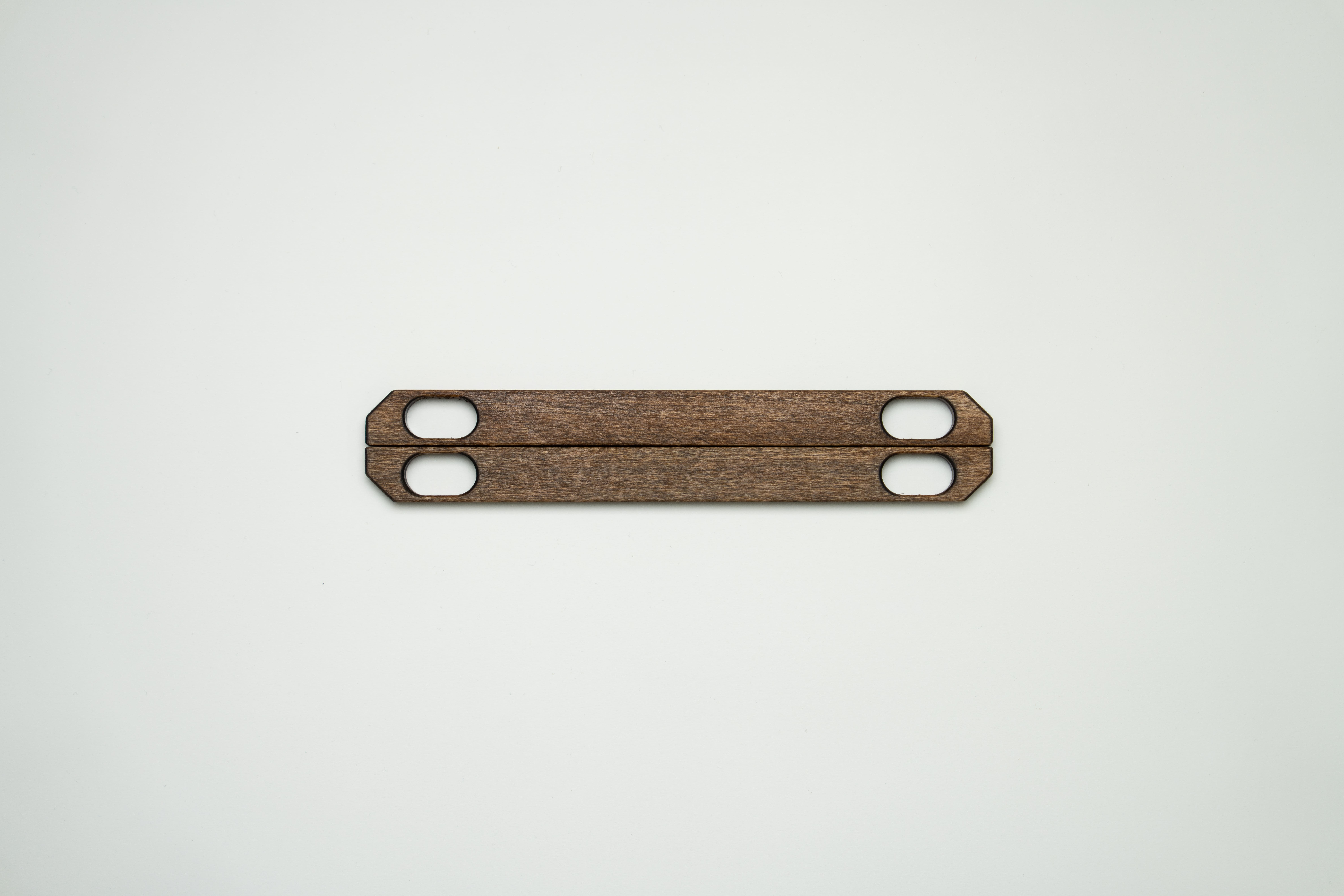
A patchin is a traditional Japanese wooden handle — shaped, turned, and finished by hand — designed to loop or clip through the gathered neck of a furoshiki-wrapped bundle, transforming any square of cloth into a structured, elegant, carriable bag. Not just any furoshiki. Any scarf. Any square of fabric you already own. In minutes, without sewing, without hardware, without anything except the patchin and the cloth in your hands.
This is not a modern invention dressed in heritage language. The patchin is the real thing: a craft object with a lineage stretching back through Japanese material culture, still made today by masters in Japan using techniques that have changed very little across centuries. At Renaras, we make our patchins in this same tradition — wooden, handcrafted, built to last and built to be used.
A patchin weighs almost nothing. It changes everything about how you carry the world.
Furoshiki: The Ancient Japanese Art of Carrying With Cloth
To understand the patchin, you must first understand furoshiki — 風呂敷 — the Japanese art of wrapping and carrying objects in cloth. The word itself means ‘bath spread,’ and its origins reach back to the Nara period of the eighth century AD, when the imperial court used large squares of fabric to bundle and transport precious objects between temples and palaces. Monks carried sutras this way. Courtiers carried lacquerware. The cloth was both vessel and protection, both container and ceremony.
The name furoshiki entered common use during the Muromachi era (1336–1573), when public bathhouses became the social heartbeat of Japanese towns and cities. Bathers arrived carrying their belongings wrapped in cloth, which they spread on the changing room floor as a personal, portable mat — a square of personal territory in a communal space. When they left, the same cloth became the bag again. One object, two purposes, zero waste. The furoshiki tradition was born from this understanding that a single well-made thing should serve every function asked of it.
By the Edo period (1603–1868), the furoshiki was woven into the fabric of daily Japanese life at every level of society. Merchants carried goods to market wrapped in indigo-dyed cotton furoshiki. Samurai transported armour and sword fittings in silk. Brides arrived at their new households with trousseau wrapped in ceremonial furoshiki embroidered with family crests — mon — that announced lineage and intention before a word was spoken. The Emperor’s household used furoshiki of a specific imperial purple silk, reserved for the sovereign’s belongings alone. The wrapping was the message. The cloth was the meaning.
In Japan’s Edo period, how you wrapped something was as important as what was inside. The furoshiki was the first impression, the proof of care, the visible evidence of respect.
The Mythology of the Carrying Cloth
Japanese folklore and spiritual tradition are saturated with the significance of cloth and wrapping. The tanuki — the shape-shifting raccoon dog at the heart of so many Japanese folk tales — is said to have demonstrated to humans the transformative power of cloth: how a flat square becomes a vessel, how the humble becomes the magnificent through the application of knowledge and intention. In Shinto tradition, sacred objects in shrines are wrapped in layers of ritual cloth, each layer a further remove from the profane world, each wrapping an act of reverence.
There is the legend of Jizō, the bodhisattva of travellers and the vulnerable, who appears in countless folk tales as a wanderer encountered at a crossroads — his worldly belongings bundled in a furoshiki slung over one shoulder. To assist such a traveller, to carry his bundle or to offer cloth when his own had given out, was understood as an act of profound merit. The bundle was not baggage. It was the whole of a life in portable form.
Most enduring is the concept of tsutsumu — 包む — which carries both the literal meaning of ‘to wrap’ and the deeper meaning of ‘to hold with care and intention.’ In Japanese gift-giving culture, which remains one of the most sophisticated in the world, the wrapping is never an afterthought. It is the first gift. The care with which something is wrapped communicates everything about how the giver regards the recipient. An unwrapped gift is almost a contradiction in terms.
Tsutsumu. To wrap is to protect. To carry is to honour. To choose the cloth and the handle is to say something true about what you value.
The Patchin: A Wooden Handle With Centuries Behind It
The furoshiki has one practical limitation that wrapping technique alone has never fully resolved: the knotted cloth, however beautifully tied, does not always sit comfortably in the hand over distance. The corners bunch, the grip shifts, the knot loosens with movement. Japanese craftsmen understood this problem and solved it the way they solve most problems: with shaped wood and patient hands.
The patchin is a wooden handle — turned on a lathe, carved, sanded smooth through progressive grades until the surface achieves that particular satiny finish that only comes from hours of hand-work. It is designed to pass through the gathered neck of a furoshiki bundle, locking the cloth in place and providing a firm, ergonomic grip that distributes the weight of the contents evenly across the palm. No metal fastenings. No plastic clips. Just wood, shaped to fit the human hand, attached to cloth through the most direct and elegant means possible.
In Japan, masters have been making patchins in this tradition for centuries. The craft is not extinct, not a museum piece, not a technique known only to specialists. Japanese craftsmen make patchins today, in small workshops, using the same principles of hand-shaping and patient finishing that have always defined the object. The form has been refined across generations because it works — because wood at the right density and the right finish is warm, grippy, durable, and beautiful in a way that manufactured alternatives cannot match.
At Renaras, we make our patchins in this tradition. Each one is shaped and finished by hand. Each one is made from wood chosen for density, grain, and the quality of its finish. Each one is built to last decades, to acquire through use the slight darkening and smoothing that transforms a new object into a personal one.
Wood remembers the hand. A patchin carried daily for years becomes yours in a way that no manufactured handle, no injection-moulded clip, no algorithmic design can ever replicate.
How a Patchin Works: Any Scarf Becomes a Bag

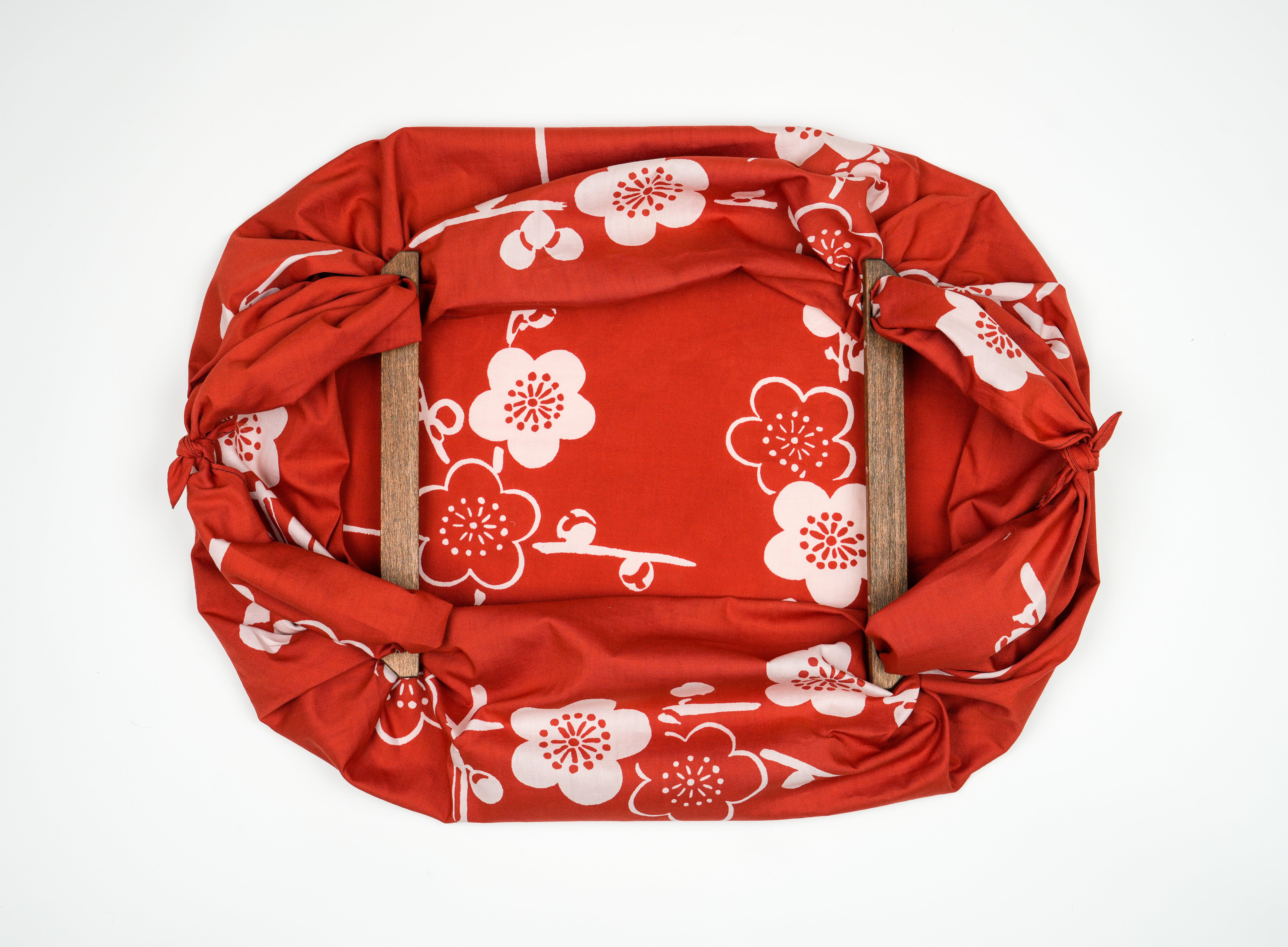
The mechanics are simple enough to master in minutes. Take any square scarf — silk, linen, fine cotton, cashmere, vintage or new — at least 70 centimetres across. Place your items in the centre: groceries, a bottle of wine, a gift, a lunch, a change of clothes. Gather the four corners upward into a bundle. Thread the gathered neck through the patchin, or loop the patchin firmly around it. You have a bag.
The patchin holds the gathered cloth in place, creating a stable, structured grip that allows you to carry the bundle at your side or over the forearm with confidence. The wooden handle sits naturally in the hand. The cloth hangs below it in clean, gathered folds. It looks intentional because it is intentional. It looks beautiful because the materials are beautiful. It looks like nothing else currently moving through the streets of European cities, because almost nothing else currently moving through those streets has a thousand years of craft thinking behind it.
At the market: practical, elegant, zero plastic. At dinner: untied, the scarf becomes a table runner or a placemat, the patchin rests beside it as a decorative accent. As a gift: the wrapping is the first present, and the recipient keeps everything. No tissue paper. No box. No waste. One object, six functions, infinite combinations.
This is furoshiki thinking. The patchin makes it accessible with whatever you already own and love.
You do not need a new bag. You need a patchin — and the scarf already hanging in your wardrobe.
Mottainai: The Japanese Philosophy That Makes the Patchin Radical
Mottainai — 勿体無い — is one of those Japanese concepts that resists clean translation because the thing it describes is so culturally specific, so woven into a particular way of understanding objects and their relationship to human life, that no single English word carries the full weight of it. It is regret at waste. It is recognition that every object contains more value than a single use can exhaust. It is the quiet moral conviction that discarding something with life still in it is a form of transgression.
The furoshiki tradition — and the patchin that makes it fully functional — is mottainai made into daily practice. The scarf that carries your shopping on Tuesday wraps a gift on Friday and covers a table on Saturday. Nothing is single-use. Nothing is disposable. The object accumulates a life rather than being consumed by a single moment of it.
The sustainable bag market has produced many admirable objects: recycled totes, organic cotton shoppers, plant-leather alternatives. These are worthy efforts. But there is something more radical, and more honest, in the furoshiki and patchin tradition — because it does not ask you to buy a sustainable alternative to the bag you already have. It asks you to stop thinking in bags altogether. To think in cloth. To recognise that the scarf in your wardrobe is already a bag, already a gift wrap, already a table covering, already everything you need, and that it has been waiting for a patchin to remind it of this.
In a world producing over one hundred billion garments annually, the vast majority destined for landfill within three years, this is not a small reframing. It is a fundamental one.
Wabi-Sabi and the Beauty of the Useful Object
Japanese aesthetics offer another framework for understanding why the patchin matters: wabi-sabi — 侘寂 — the philosophy of beauty found in imperfection, impermanence, and the honest evidence of use. A lacquered bowl repaired with gold kintsugi. A tea house worn smooth by the hands of generations of practitioners. A wooden handle darkened and polished by years of daily carrying.
The patchin is a wabi-sabi object by nature. It does not aspire to the showroom finish of luxury goods designed for display. It aspires to the deeper beauty of the thing that has been genuinely used — that shows, in its surface, the accumulated evidence of a life.
A new patchin is beautiful. A patchin carried for ten years is more beautiful. The wood has absorbed something of the hand that carried it, the places it has been, the things it has held. This is a different relationship with objects than consumer culture prepares us for. The most valuable object is the one that has been loved into its present form.
Buy once. Carry always. Watch it become more beautiful with every use. This is the opposite of everything fast fashion has tried to teach us.
Luxury Redefined: The Most Irreplaceable Handle in the Room
Contemporary luxury is undergoing a quiet crisis of meaning. The logo-bearing bag, the immediately recognisable monogram, the status object designed primarily to be recognised as such — these things still sell, but increasingly to a buyer who suspects, somewhere beneath the purchase, that they are buying performance rather than substance. The truly discerning buyer is looking for something else. Not rarer in the sense of limited edition. Rarer in the sense of genuinely singular.
A handcrafted wooden patchin, made in the Japanese master tradition, is singular in the most literal sense. It has been made by a specific pair of hands, from a specific piece of wood, finished to a standard that cannot be automated or replicated at scale. It will age in a specific way, particular to the use you make of it, the things you carry, the way your hand holds it. In twenty years it will be entirely, unmistakably yours.
No logo achieves this. No factory can manufacture it. No algorithm can design the thing that a patchin becomes through years of use by a single owner.
Real luxury is not what everyone recognises. It is what only you know the full value of — and what time and use make more valuable still.
The Renaras Patchin: Wood, Craft, Japanese Tradition
At Renaras, we make our patchins in the Japanese master tradition: wooden, hand-shaped, hand-finished, built to last. Each patchin is turned and sanded through multiple stages until it reaches the finish that only hand-work produces — that particular smoothness that is warm rather than cold, that grips rather than slides, that improves rather than deteriorates with handling.
We make them to be used daily. With the groceries and with the gift. With the vintage silk scarf and with the linen square. With whatever cloth you love most and want to carry most beautifully. The patchin does not require a special furoshiki. It requires only cloth and a hand willing to carry something with intention.
Each Renaras patchin comes with guidance on the essential furoshiki knots and carrying techniques — because the object is only as good as the knowledge that makes it functional. We want you to use it the first day it arrives. We want it to look, in ten years, like it has lived.
Because an object that has lived is worth infinitely more than one that has merely been owned.
The patchin is small. The tradition behind it is enormous. The change it makes to how you carry the world — how intentionally, how beautifully, how sustainably — is larger still.
This is what one piece of shaped wood, finished by hand in the Japanese tradition, can do.
The Renaras patchin is available now at renaras.com Handcrafted in the Japanese master tradition. Made to be carried. Made to last.
Shop patchins and furoshiki accessories at renaras.com
— The Silk Journal by Renaras journal.renaras.com