

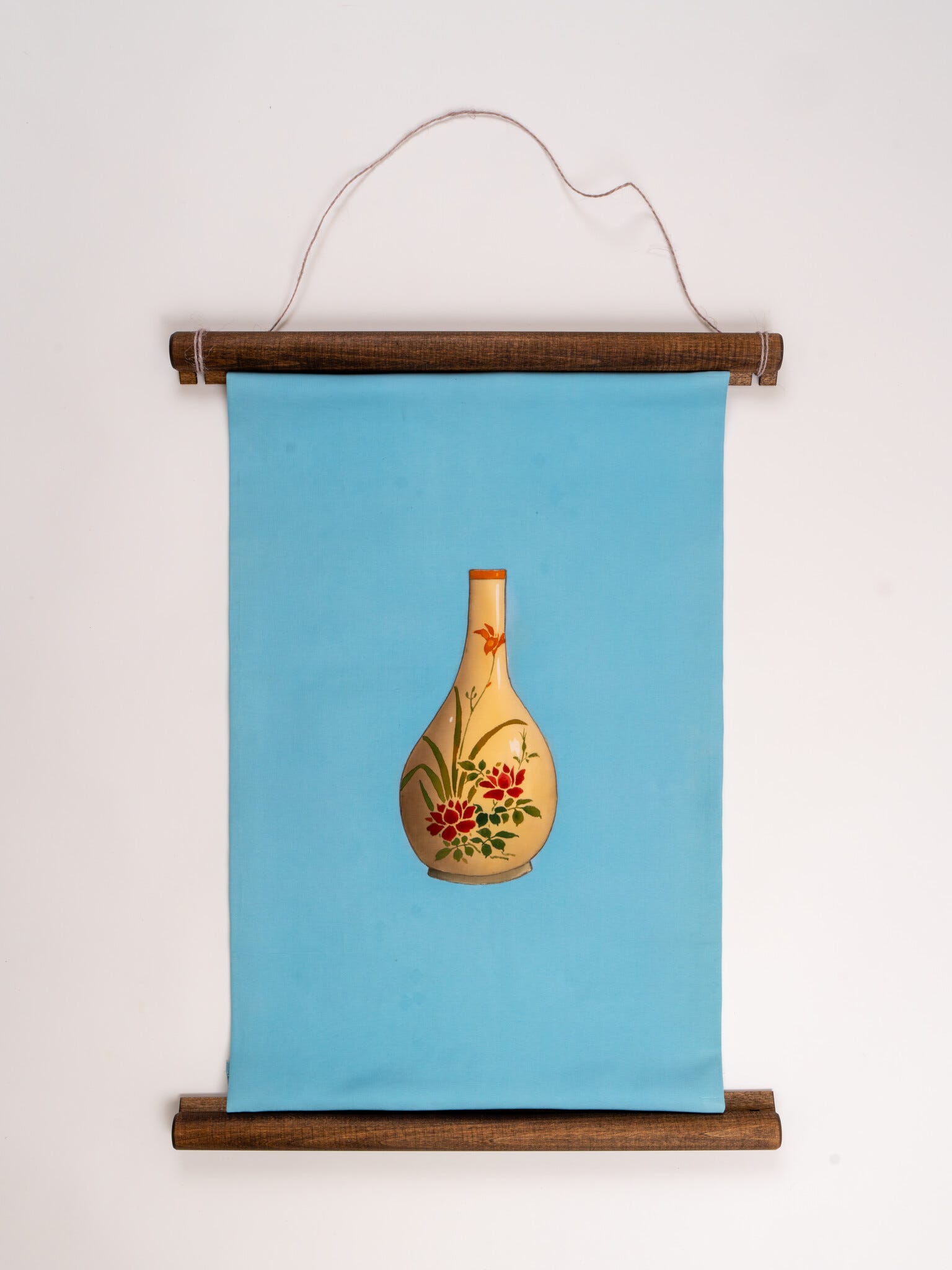


The Japandi trend had a good run. The word itself, a portmanteau of Japanese and Scandinavian, described the fusion of Japanese aesthetic restraint with Nordic functionality that dominated interiors from roughly 2020 onward. Clean lines, natural materials, muted palettes, an emphasis on craft. At its best, it produced genuinely beautiful spaces. At its worst, it became a Pinterest board: a light wood table, a ceramic vase, a linen throw, all arranged to communicate a calm that the inhabitant may or may not actually feel.
By 2026, something has shifted. The look persists, but the conversation has moved past surfaces toward substance. The question is no longer “does this look like Japandi?” but “does this object carry real weight, real provenance, real craft, real history, or is it a reproduction of an idea of craft?”
This is where heritage textiles enter, and where they outlast the trend that made them visible.
What “quiet luxury” actually requires
The phrase “quiet luxury” has been used so often it risks meaning nothing. But the original impulse behind it is sound: the idea that genuine quality communicates through material presence rather than branding, that the most valuable objects in a room are often the ones that take the longest to notice and the longest to forget.
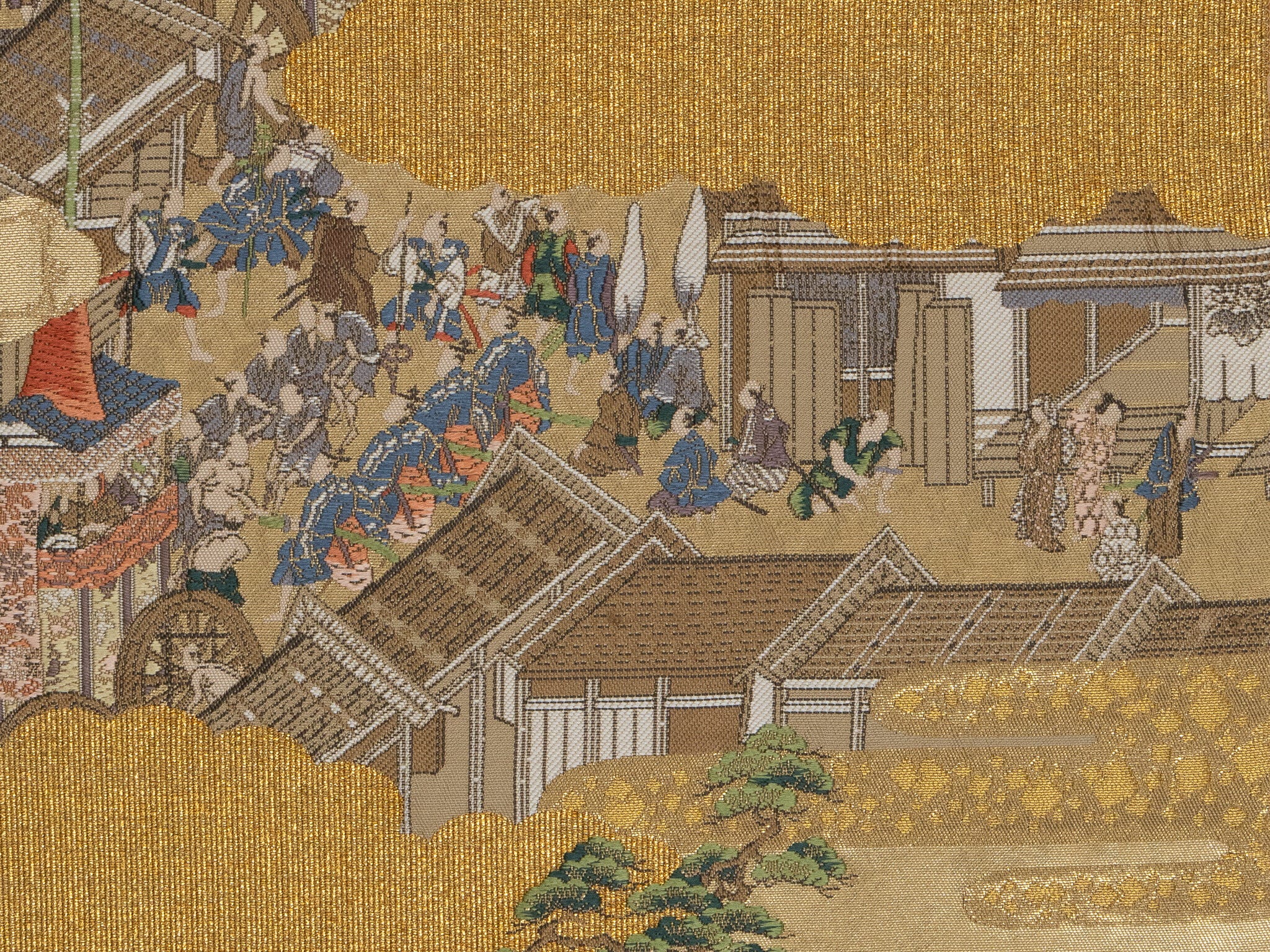
Vintage Japanese ceremonial silk is quiet luxury in its most literal form. A Nishijin-woven fukuro obi carries no label. It announces nothing. But the density of its weave, the depth of its colour, the behaviour of its gold thread in changing light: these things register. Not immediately, not loudly, but permanently. Once you have handled a piece of silk that took two hundred hours to weave, the experience recalibrates your sense of what textiles can be.
The narrative wall
One of the most interesting developments in serious interior design right now is the move away from collections of framed prints toward singular, high-impact textile pieces. A vintage silk textile painting does something that paint, paper, or photographic prints cannot: it interacts with light three-dimensionally. The prismatic structure of silk fibre means the surface shifts across the day, a quality that flat media cannot replicate. This makes a silk textile painting genuinely alive in a way that a framed image, however beautiful, is not.
Function, not just display
The other development is the return of textiles to functional use. Table runners made from ceremonial silk. Furoshiki used as wrapping, carrying, and soft furnishing. Lumbar pillows cut from obi. The idea is straightforward: these textiles were made to be touched, handled, lived with. Framing them behind glass preserves them, but it also seals them away from the sensory experience they were designed to provide.
At Renaras, every piece is made to be used. The silk table runners go on dining tables where they will be seen by candlelight and touched by guests. The lumbar pillows go on sofas where they will be leaned against every evening. This is not carelessness with heritage material — it is respect for its original purpose, which was always contact with human life.
Why heritage outlasts trend
Trends have a shelf life because they are defined by novelty. Heritage textiles have no shelf life because they are defined by accumulation. A piece of silk that has already been beautiful for seventy years does not become less beautiful when the design magazine moves on to its next aesthetic. It becomes more interesting, because it has now survived multiple cycles of taste and emerged, each time, as the element in the room that still holds attention.
This is not a trend piece. It is the thing that remains when the trend is over.
Explore the full Renaras collection.