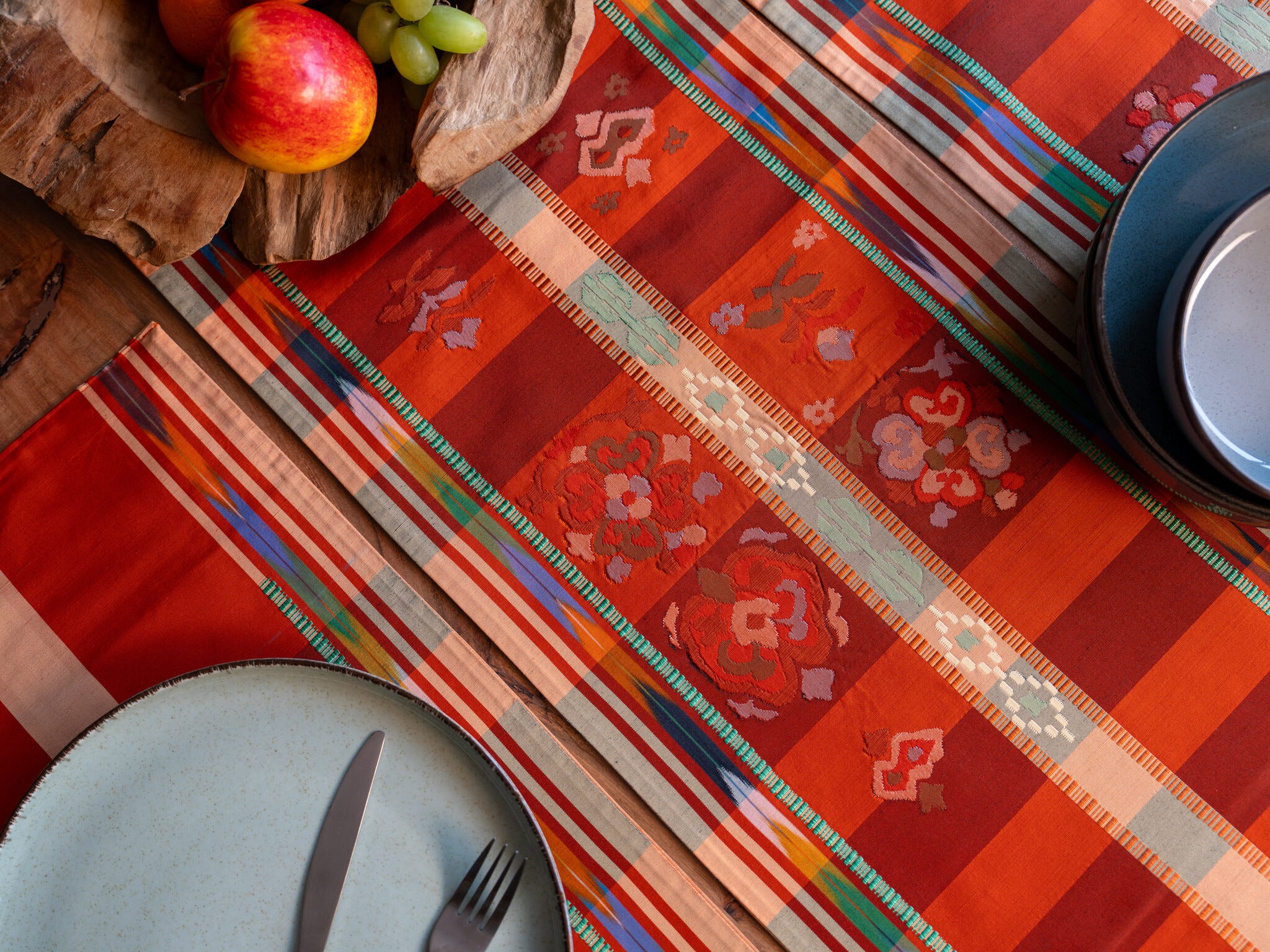
Last autumn I set a table for six people using a vintage fukuro obi as a runner. The obi was Nishijin-woven, probably late Showa period, brick-red ground with gold-thread chrysanthemums and geometric tortoiseshell patterning. I had bought it at auction, authenticated it, and spent a week deciding what it wanted to become. It wanted to be on a table.
The dinner was not special. Friends, a chicken, good bread, too much wine. But something happened when people sat down. They noticed the silk. Not dramatically, nobody gasped, but there was a moment of collective adjustment. The table had a centre of gravity it had not had before. People slowed down. Somebody reached out and touched the edge of the runner with one finger, absently, the way you touch something that feels older than you.
That small moment is, I think, the whole point.
What omotenashi actually means
Omotenashi is usually translated as “Japanese hospitality,” which is accurate but insufficient. The deeper meaning is closer to anticipating what your guest needs before they know they need it, and providing it without drawing attention to the effort.
In practice, this means the host is invisible. The preparation is invisible. What is visible is the environment: the room, the table, the objects chosen to receive the guest. In the Japanese tea ceremony, the host selects the scroll for the tokonoma alcove, the flower for the vase, the bowl for the tea, all calibrated to the season, the occasion, and the specific guest. None of this is explained. It is simply present, and the guest either perceives it or does not.
The table is where most Europeans encounter omotenashi without knowing it. The difference between a table that has been set and a table that has been prepared is the difference between arrangement and intention. A set table is correct. A prepared table has thought about who is coming.
What vintage silk does to a room
A maru or fukuro obi was designed to be the most visible textile in a dressed kimono ensemble. It was the culmination of the outfit: wider, heavier, more densely woven than anything else in the composition. The patterns were not printed or embroidered after the fact. They were woven into the structure of the cloth, thread by thread, sometimes over hundreds of hours.
When you take that textile and lay it horizontally across a dining table, it does not lose this intensity. It translates it. The vertical authority of the obi becomes horizontal presence. The gold thread, which was designed to catch light as a woman moved through a room, now catches candlelight from a different angle: lower, warmer, more intimate.
This is what we do at Renaras. We take these ceremonial textiles, silk that was woven for the most important occasions in a family’s life, and give them a second context in which their quality can be seen and felt daily.
Three pieces, three registers
The brick-red runner I used for that autumn dinner is characteristic of a specific Renaras register: warm, grounding, earthy. It works on dark oak. It works on raw walnut. It turns a weeknight meal into something with weight.
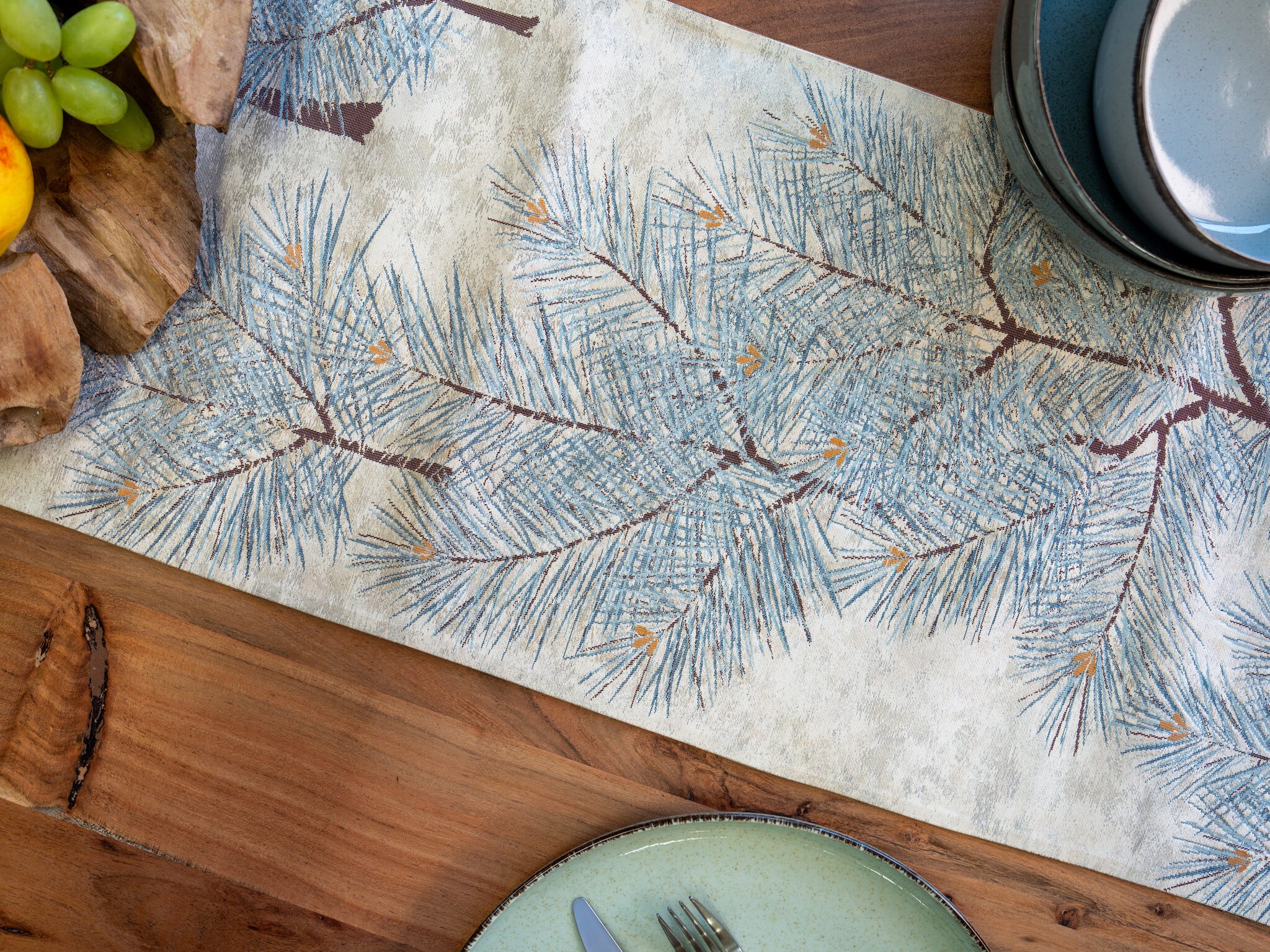
We also carry pieces in a completely different register: silver and teal, pine-needle motifs, the palette of a Zen garden under fresh snow. These are quieter. They belong in rooms that are already calm and want to become calmer.
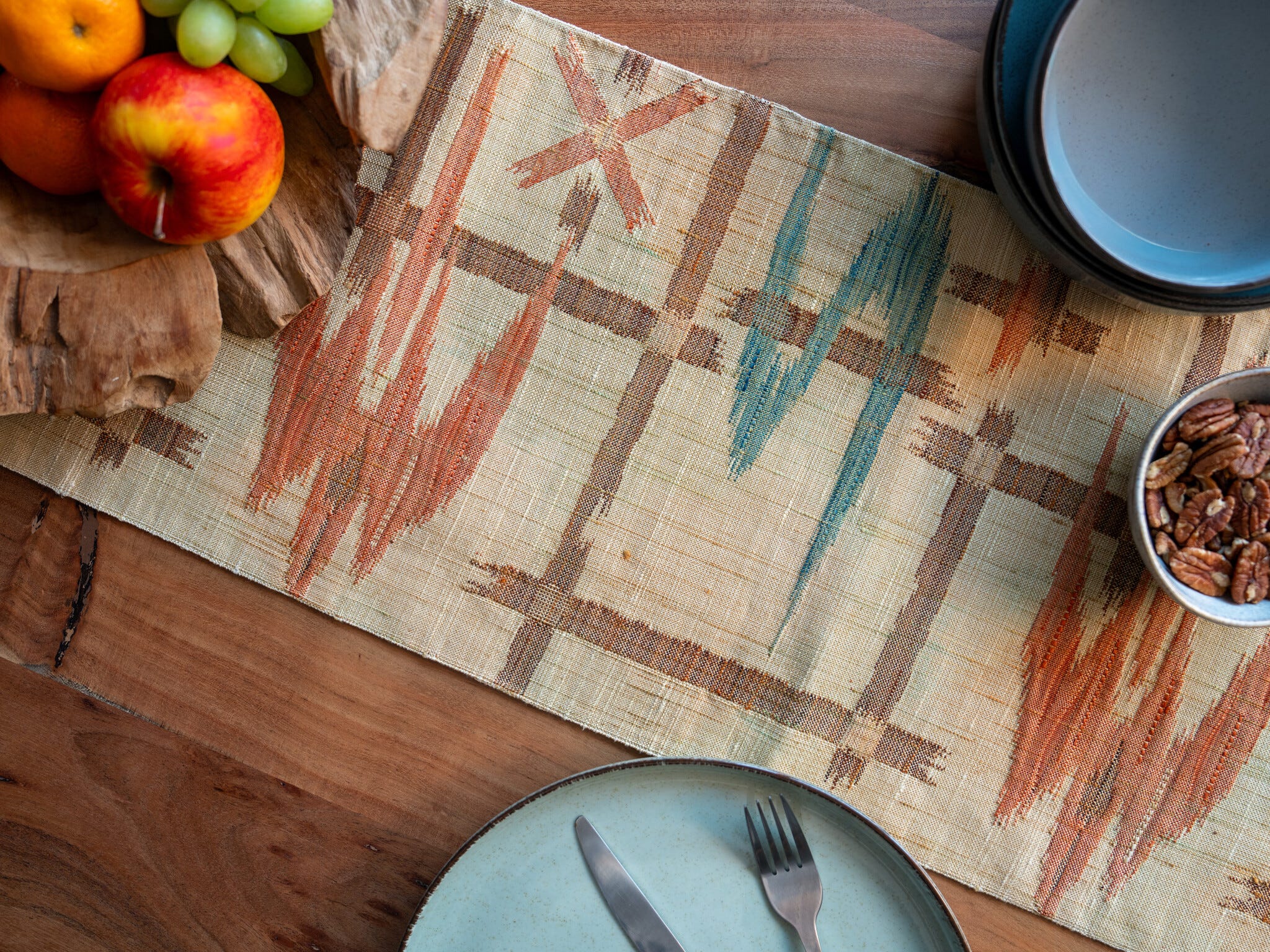
And then there are the pieces where indigo meets burnt orange, where the old loom produced something that looks almost abstract to a modern eye, cloth that moves between tradition and something harder to name. These are for people who like their interiors to ask questions rather than answer them.
The weaver at the table
Every piece of vintage obi that becomes a Renaras table runner carries something invisible with it: the hours of the person who made it. Two hundred hours, sometimes, for a single obi. That labour does not disappear when the context changes. It is in the density of the weave. In the way the cloth drapes: that quality the Japanese call koshi, a kind of dignified stiffness, cloth that holds its shape because it was made by someone who understood what shape it needed to hold.
Your guest will not know any of this. They will simply feel that the table is different. That dinner is, somehow, a little more serious. That the room is paying attention to them.
That is omotenashi. Not the explanation. The feeling. A finger resting, for a moment, on the woven edge.