

There is a word in Japanese — iro (色) — that means colour, and yet it also means, in its deeper register, feeling, desire, the visible world. Colour, in the Japanese sensibility, has never been merely optical. It is philosophical. It is seasonal. It is, above all, a moral vocabulary.
To study the traditional Japanese chromatic system is to enter an entirely different civilisation of perception. Where the European tradition — from the Venetian colourists to the Impressionists of Giverny — tends to understand colour as an attribute of light, the Japanese understand it as an attribute of time. A hue is not simply what the eye registers; it is what the year remembers. Colour carries memory, carries ceremony, carries the weight of a dynasty.
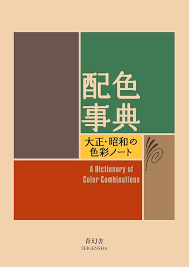
This distinction is not abstract. It is encoded in one of the most extraordinary documents in the history of aesthetics: the Irojiten, or the Japanese Colour Dictionary, a vast taxonomy of named hues that numbers in the hundreds, each possessing its own etymology, its own seasonal association, its own emotional register. Where the English language offers a meagre palette of basic colour terms — red, blue, green, yellow — the classical Japanese chromatic vocabulary runs to extraordinary specificity, distinguishing between the red of early maple leaves and the red of lacquerware, between the grey of aged cedar and the grey of winter sea-mist.
In Japan, a colour is never merely a colour. It is a moment suspended in silk, a season caught mid-breath, a dynasty’s quiet insistence on beauty.
A Dictionary Written in Silk
This tradition did not come from a painter’s studio but from the dye-house and the imperial wardrobe. For centuries, the garments worn at the Heian court followed the kasane no irome, the layered colour-combination system, a sartorial grammar so refined it amounted to a second language. Each combination of silk layers, glimpsed at the sleeve-opening of a court robe, spoke of the wearer’s rank, their aesthetic sensibility, their reading of the season’s mood. The Irojiten sets this system down; the system itself is centuries older than the dictionary that records it.
These combinations bore names of real poetry. Yamabuki (山吹): the burnished gold of the kerria rose, the first fierce flower of Japanese spring. Usuyuki (薄雪): the blue-white of fresh-fallen light snow, a colour so fugitive it could only be rendered in the most delicate silk weave. Tokiwa (常磐): the deep, permanent green of the evergreen pine, carrying constancy and loyalty. Ebi (蝦): the dignified aubergine of the prawn’s shell, a colour associated with wisdom and age.

Against these, the European nomenclature can seem blunt. We say ‘yellow’ where the Japanese say yamabuki and conjure a flower. We say ‘green’ where they say wakatake (若竹), the green of young bamboo three weeks from the earth, or moegi (萌黄), the first almost-yellow-green of spring shoots pushing through February soil. The difference is not merely linguistic; it is perceptual. A culture that names such distinctions is trained to see them.
Kasane no Irome: The Art of Layered Harmony
At the heart of the Japanese colour system is a principle foreign to the European tradition of contrast: kasane, or layering. Rather than setting colours in opposition, the violent confrontation favoured by Delacroix, or the complementary tension beloved of the Fauvists, the Japanese aesthetic sought gradation, transition, the barely perceptible shift from one tone to its near-sibling.
The classic kasane combinations read like poems. Kurenai no kasane (紅の重ね): crimson over white, the combination of a winter court lady, snow already half-stained with the promise of spring blossom. Fuji no kasane (藤の重ねいろ): pale lavender over deep lavender, the palette of wisteria clusters falling in May, the lighter flowers crowning the deeper below. Yamabuki no kasane: bright gold meeting soft white, the kerria rose against an early-morning sky.
These were not merely garments. They were arguments. A noblewoman who chose her kasane with particular sensitivity was said to possess miyabi, courtly refinement, a quality held to be as significant as birth or learning. The combination worn to an autumn moon-viewing ceremony was as studied, as deliberate, as freighted with meaning, as the verses composed that evening.
The kasane combinations were arguments made in silk: a noblewoman’s colour choices as studied and deliberate as any verse composed by moonlight.
Legends Written in Pigment
Colour in Japan accreted legend as it accreted meaning. Perhaps no single hue carries a richer mythological history than kakitsubata (杜若): the deep, almost spectral blue-violet of the iris, a colour hovering between sorrow and transcendence.
The great poet Ariwara no Narihira, wandering eastward in the ninth century in the opening pages of the Tales of Ise, paused at the iris marshes of Mikawa and composed an acrostic poem, the first syllable of each line spelling out ka-ki-tsu-ba-ta, weaving the flower’s name into an elegy for his distant beloved. From that moment, the colour of the iris became the colour of longing across an irrevocable distance. To dress in kakitsubata was to wear one’s grief and one’s fidelity at once: a chromatic declaration.
Then there is beni (紅): the fierce, lacquered red drawn from safflower petals through a near-alchemical process of repeated pressing and oxidation. Beni was enormously costly, said to require some eighty safflower blossoms for enough pigment to stain a single fingernail. It became the red of heroism, of passionate love, of sacrifice: the red that Japanese warrior culture adopted for its battle flags because it signalled the willingness to give what is most precious and most irreplaceable.
And then there is one of the most philosophically laden colours in the Japanese vocabulary: wabi-iro (侘色), a term so resistant to translation that it is usually left in the original. This is the colour of the thing past its moment of perfection: the grey-brown of a lotus pod in December, the dull silver of rain-soaked cedar planks, the amber of dying lacquer. It is the colour of aware, of poignant impermanence. Where the European eye might see shabbiness, the Japanese eye trained on wabi-iro sees beauty at its most honest, its most mortal, its most true.
The Eastern Palette Against the Western Canon
To set the Japanese chromatic sensibility beside the European tradition is to see how far our assumptions about colour harmony are culturally constructed rather than naturally given.
The Western canon, from the colour theory of Goethe to the Bauhaus experiments of Itten and Albers, has tended to work on the principle of contrast. Complementary colours (red and green, blue and orange, yellow and violet) were understood to generate visual energy through opposition. The Impressionists exploited this with near-scientific vigour, setting touches of orange beside flecks of blue to create the vibration they mistook for light. Even the most restrained European interiors of the eighteenth century worked on a logic of punctuation: a room in the palest grey-green might receive a single, decisive note of gilded ochre.
The Japanese sensibility gravitates toward what we might call tonal affinity: the company of colours that know each other. The great monochrome ink painters, Sesshū and Hasegawa Tōhaku, found that the whole emotional range of the visible world could be rendered in gradations of sumi, black ink diluted through a hundred shades of grey and brown. The textile artists who wove the grand nishiki brocades of Kyoto built their harmonies not from contrast but from proximity: shades of one family set so close the eye can barely tell where one ends and the next begins, a depth quite unlike anything in the Western tradition.
This is not to say the Japanese palettist avoided boldness. The maru obi, the most formal of all kimono sashes, worn only for the most significant ceremonies, could combine a ground of deep kurenai (紅) crimson with woven patterns in ivory, gold, and peacock blue-green, a combination of striking opulence. But even here the logic was different: those colours were not contrasting but complementary in the specifically Japanese sense of completing a seasonal or ceremonial narrative. The blue-green recalled the pine; the ivory the snow on the pine; the crimson the camellia blooming obstinately at the pine’s root in January. The garment was not a colour combination. It was a landscape.
The Japanese textile artist did not combine colours. She composed landscapes: the deep crimson of the camellia, the ivory of snow, the blue-green of winter pine, all held in a single sash worn once, on the most significant morning of a life.
The Courage to Inhabit Colour
There is a peculiarly modern anxiety about colour: a fear, shared by homeowners and dressers alike, that committing to a strong or unexpected palette is somehow rash, that one might ‘get it wrong’, that the safest path is the muted, the off-white, the greige. This anxiety is a failure of the imagination. It is also, the Japanese chromatic tradition would suggest, a failure of philosophy.
To walk through a Japanese textile archive, those still, hushed rooms where centuries-old obi lie furled like sleeping organisms, is to meet a civilisation that feared nothing in the realm of colour. Here is a tsumugi obi in which the palest celadon silk has been woven with threads of midnight blue and the faintest blush of rose: a combination that in European hands might seem treacherous, yet in the Japanese weaving reads as the sky at that moment between dusk and dark when the first stars are just legible. There, a fukuro obi whose ground is a deep, almost-black navy, woven with cranes in silver and pale gold: the palette of a winter ocean at moonrise.
These objects carry a practical lesson. The Japanese textile tradition shows, over and over, that the combinations we have been trained to regard as ‘difficult’ or ‘bold’ (dusty rose with forest green, saffron with charcoal, ivory with deep aubergine) are exactly the ones that reward the eye most generously, that deepen and shift as the light changes, that feel alive in a room or on a person in a way no cautious palette can.
The principle of ma (間), negative space, the meaningful pause, has an analogue in colour: letting a palette breathe. An interior in which one strong, historically grounded Japanese colour, a deep akabeni vermilion, a rich tokiwa pine-green, a complex yamabuki gold, anchors a room of otherwise quiet neutrals is not a room that has taken a risk. It is a room that has made a declaration. The single obi panel on an otherwise bare wall does not compete with the room; it completes it.
Wearing the Dictionary: Colour in Contemporary Life
The lessons of the Japanese chromatic tradition translate, with surprising immediacy, into contemporary dress and interior design. The fear of colour, that most paralysing of modern aesthetic afflictions, dissolves almost entirely once you understand that the Japanese palette is not a set of individual hues but a set of relationships.
Consider kakitsubata (blue-violet iris) with yamabuki (deep gold): in Western terms, purple and yellow, a pairing that carries faint memories of Halloween or heraldry. In the Japanese register, this is the palette of the iris marshes in late spring, when the yellow kerria roses and the blue-purple irises bloom in proximity, as they have for ten thousand years. The association removes the garish connotation and replaces it with something natural and earned.
Or consider the pairing that recurs in the finest Edo-period textiles: sumi (墨), the near-black of ink, with the palest shirakaba (白樺) birch-white and a single thread of deep beni red. In Western colour theory this reads as monochrome with a bold accent. In the Japanese tradition it is the palette of a calligrapher’s desk on a winter morning: the black of the inkstone, the white of the paper, the red of the scholar’s seal. It is a combination of quiet authority.
For those who dress by instinct, who arrange their rooms by feeling, who sense that the conventional rules of colour harmony leave something essential unnamed, the Japanese chromatic tradition offers not a new set of rules but a release from rules altogether. It asks only that you pay attention: to what you are looking at, to when you are looking, to what the colours remember.
Renaras: Where the Colour Lives On
It is this philosophy, colour as time, as ceremony, as irreplaceable document, that animates the objects made at Renaras. Each piece begins not with a design decision but with an act of preservation: the recovery of an antique Japanese ceremonial silk whose colour combinations hold, in literal thread, centuries of accumulated chromatic knowledge.
When an antique fukuro obi, its ground woven in the deep, complex nishiki crimson that Edo dyers spent lifetimes perfecting, is made into a lumbar pillow or a silk textile painting for a contemporary interior, something happens. The colours a Kyoto weaver composed in the eighteenth century, drawing on the full weight of the kasane tradition, enter a European living room and begin, quietly, to teach it something. The room discovers that the colours it thought ‘safe’ were only colours it had not yet dared to interrogate.
A Renaras table runner woven from a tsumugi, prized but informal slub silk, its palette running from the palest kusu (楠) camphor-green through shades of aged ivory to a final, decisive line of deep maroon, brings to the dining table not merely an object of beauty but a position. It says: these colours were not chosen by an algorithm or a trend report. They were chosen by a civilisation over a thousand years, refined season by season, ceremony by ceremony, until they reached a state nothing made quickly can replicate.
Each Renaras silk textile painting, each table runner, each ceremonial placemat, cut from a maru obi or a furisode silk whose colours no contemporary dye-house could reproduce, carries the full weight of the tradition the Irojiten records. These are colours with names, with legends, with the specific gravity of objects that have already survived a century or more. To place one in your home is not a decorative choice. It is to invite a conversation between your present and Japan’s past, conducted entirely in the vocabulary of colour.
To place a Renaras piece in your home is to invite a conversation between your present and Japan’s past: conducted entirely in the vocabulary of colour.
A Final Word on Courage
Colour, the Japanese tradition insists, is not decoration. It is knowledge. The woman who wore her kasane with sensitivity was not performing beauty; she was demonstrating understanding: of the season, of the ceremony, of the relationship between the visible world and the invisible one.
We have, in the modern era, lost much of that understanding. We have retreated into palettes of safety, into the beige certainties of the risk-averse interior, into the black-and-grey uniform of the fashion-anxious. And in doing so we have impoverished ourselves, not only aesthetically but philosophically. We have forgotten that a colour can be a form of argument, a form of fidelity, even a form of love.
The Japanese colour dictionary awaits any reader willing to open it. Its vocabulary is vast, its logic is ancient, and its central message is one of great generosity: that the visible world, attended to with sufficient care, offers an inexhaustible grammar of beauty. That the combination you have been afraid to make, the dusty wisteria with the deep pine-green, the pale snow-white with the fierce beni red, the aged gold with the morning-sky blue, may be exactly the combination that has been made, and perfected, for a thousand years, on the other side of the world, in silk.
All it asks is that you see.
Renaras transforms authentic vintage Japanese ceremonial silks into singular objects for the contemporary home. Each piece is one of a kind.