

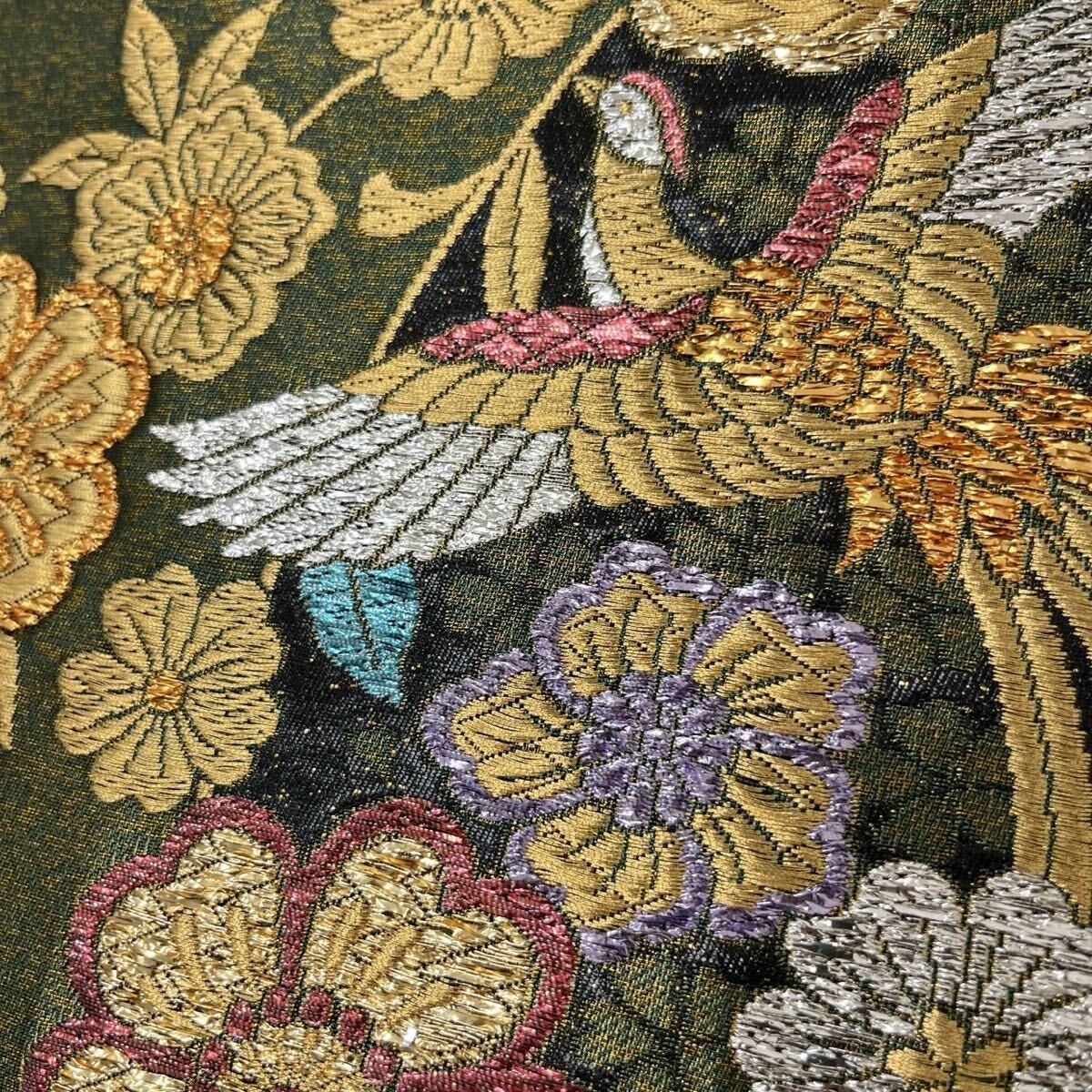
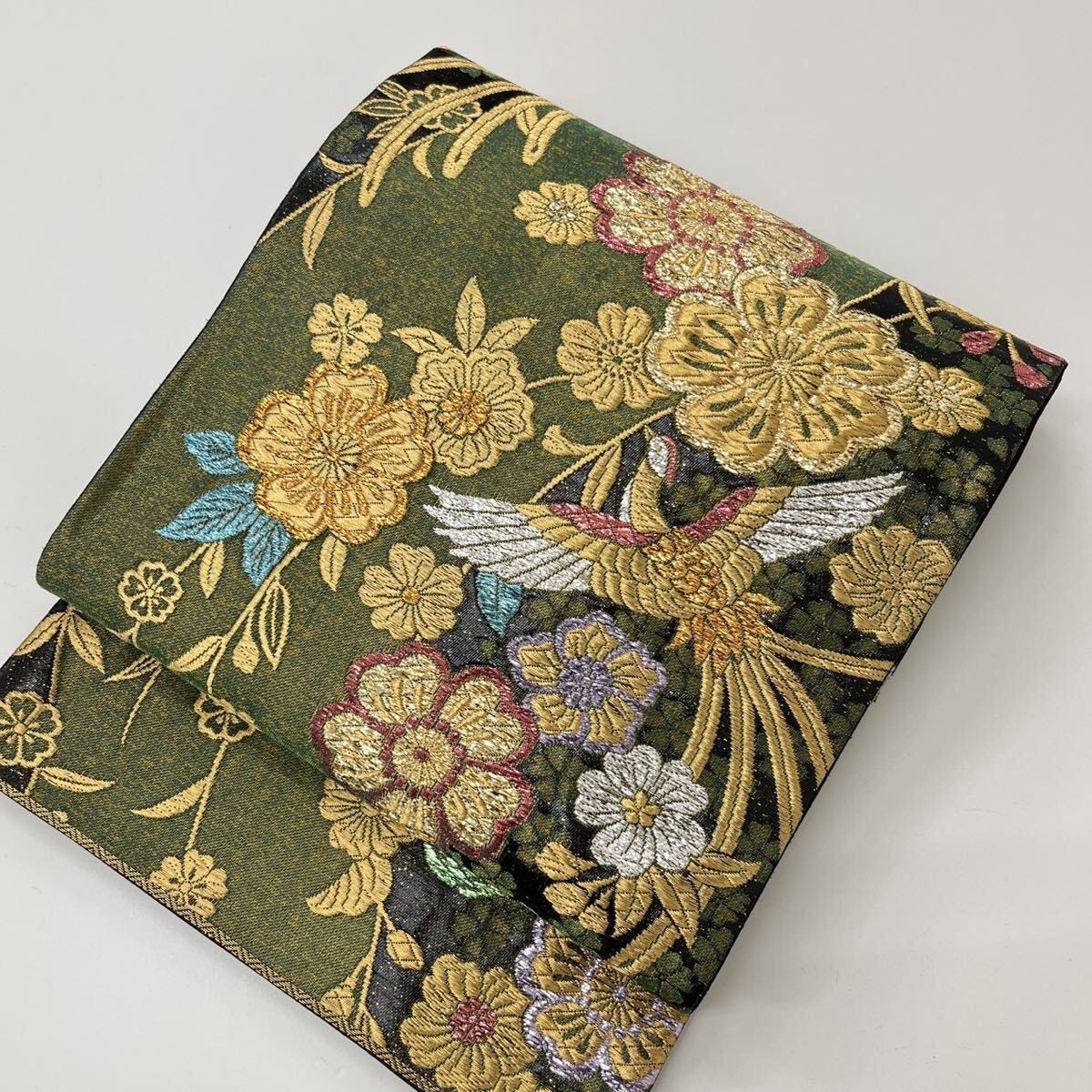
There is an obi in the atelier this week that arrived with a note. Three lines of handwriting in pencil, on the inside of the paulownia chest, in a script that the dealer in Kyoto told me was written by the original owner’s daughter, sometime in the early nineties. Mother wore this in 1962. To my brother’s wedding. She did not wear it again. I do not know why.
I have been trying for three days to write something about Mother’s Day that does not embarrass me, and the note keeps interrupting. It is the kind of sentence one cannot improve. It contains an entire lifetime, including its silences. I keep coming back to the second of the three lines — the simple declarative — she did not wear it again — and to the third, which is the one that matters: I do not know why. The daughter, writing forty years after the wedding, is honest about what she was never told. The cloth, folded for sixty years now, has kept whatever the mother kept.
We have, at Renaras, four sentences that we say after every piece. They are printed at the foot of every page of this Journal. One silk. One story. One piece. Never repeated. I wrote them years ago, in a single afternoon, to mark the way the work in the atelier actually happens — each cloth singular, each transformation a one-time event, each finished piece headed for a single room and a single life. I did not realise then how much else they would turn out to describe.
This Sunday, sitting with the obi from 1962 and the pencilled note, I found myself reading the four sentences differently. Not as a description of the work. As a description of the woman whose obi this was, and of every woman who has ever been someone’s mother. One silk. One story. One piece. Never repeated. The motto turns out to belong to her too. It may, in fact, have always been about her.
I. One silk
A piece of ceremonial Japanese silk — a fukuro obi from 1962, an uchikake from a wedding in 1958, a nagajuban worn beneath a kimono on perhaps a dozen significant evenings of someone’s life — is, before it is anything else, a record of female custody.
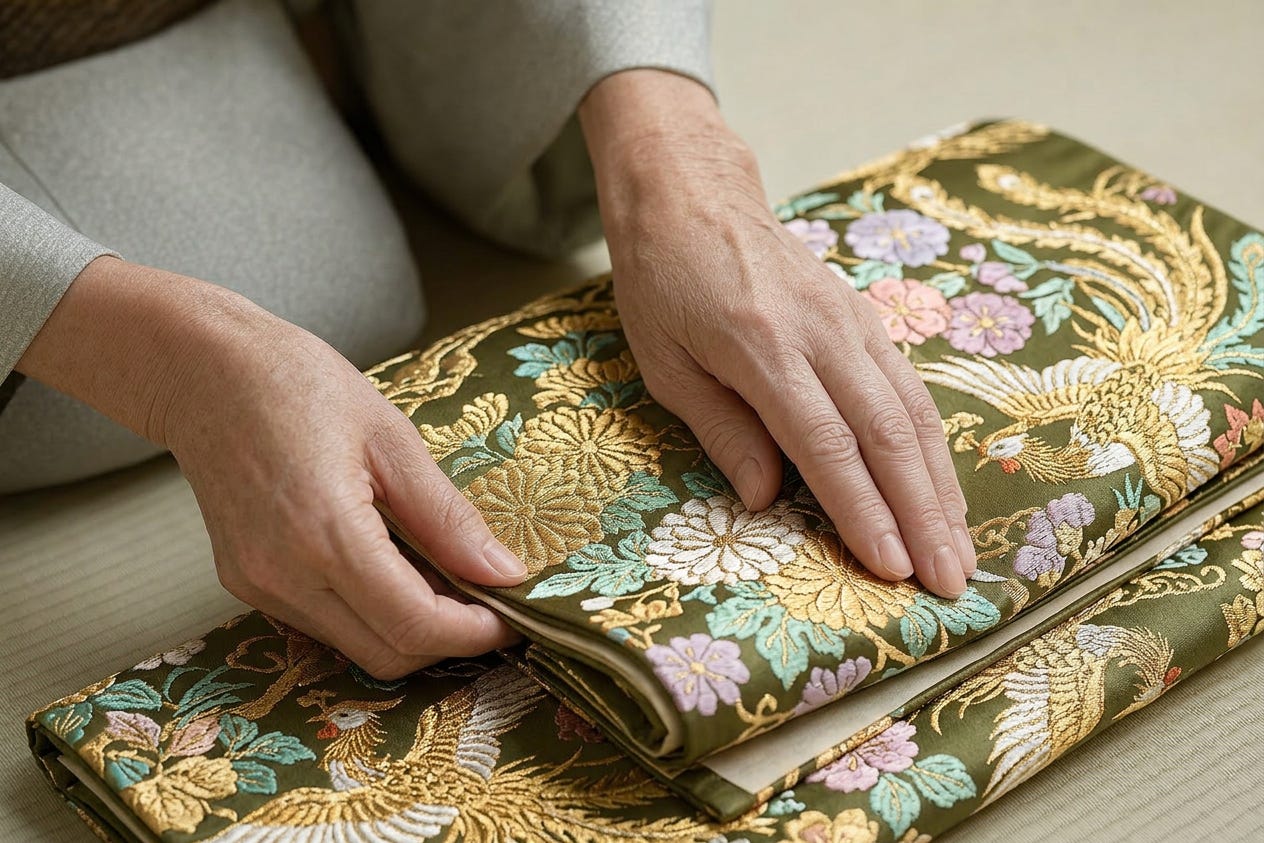
The phrase is not romantic. It is descriptive. The cloth was woven, almost certainly, by women in a Nishijin or Kiryū workshop. It was sold to the household of a bride. It was worn by her on the day for which it had been made, perhaps two or three further occasions in the next decade, and then folded — carefully, in the prescribed way, with mulberry paper between the layers and a sachet of cloves to keep the silk-eating beetles away — into a paulownia chest in an upstairs room. There it stayed. The bride became a wife, became a mother, became a grandmother, became, eventually, a name carved into a stone in a temple cemetery in Kyoto or Kanazawa or Sendai. The silk did not move. Across all of that, the silk did not move.
One silk. The motto begins here, with the singularity of the cloth itself. There was only ever this length of silk, dyed in this specific bath on this specific morning, woven by this woman at this loom, with this exact distribution of small irregularities the body of the weaver introduced and could not have introduced any other way. The piece could not be remade if you tried. The conditions — the chemistry, the hands, the moment — are no longer available.
A mother is the same kind of fact. There was only ever this woman. Whatever made her — the country she was born in, the parents she had, the year of the wedding, the brother whose marriage required a particular obi, the small private decisions whose reasons did not survive — is no longer available. She could not be remade. The conditions that produced her are gone. What remains is the trace: in the cloth, in the room she sat in, in the way her daughter holds a fork, in the silence she left in the line about why she stopped wearing the obi.
One silk. One mother. The grammar is the same.
II. One story
Every ceremonial silk that comes into the atelier carries a story we will only ever know in fragments. The 1962 obi has, so far, three lines of pencilled testimony from the daughter and whatever the silk itself says under raking light. We can date the weave roughly. We can identify the dye chemistry. We can place the workshop within a small handful of Nishijin houses active in the late fifties and early sixties. Beyond that the story belongs to the women who held it, and most of those women are no longer alive to tell it.
What we have, instead, is the cloth’s own narration. The fold-line three hand-widths from one end is a sentence: I was put away in a particular way for a long time. The slight darkening along one inner edge is a sentence: I rested against this surface for sixty years and the surface left its mark on me. The almost imperceptible thinning where the original wearer’s obi-jime cord crossed the front is a sentence: I was held tightly here, just once, by hands that knew what they were doing. None of these sentences is in language. All of them are legible if you know how to look.
A mother’s story, by the time her children are old enough to want to hear it, is also told this way — in fragments, in marks, in small physical residues. The chair she always sat in has worn unevenly on the right armrest. The kitchen drawer she opened ten thousand times has a handle that no longer quite closes flush. The handwriting in the margins of her cookbooks gets smaller after a certain year, and you do not know what happened in that year, but the cookbook does. She left her story in the surfaces she touched. We read it the way we read the cloth: imperfectly, slowly, with the awareness that most of it will remain illegible.
One story. The motto does not say the whole story, or the story we wanted, or the story that explains everything. It says one story. The story this particular cloth has to tell, no other, even where it falls silent. The story this particular woman had to tell, no other, even where she chose not to tell it. There are no substitutes. There is no second draft. There is only the one, partial, beloved, irreplaceable thing.
III. One piece
“Mother wore this in 1962. She did not wear it again. I do not know why.”
The third sentence of the motto is the one I find hardest to write about, because the word piece has a particular weight in the atelier that does not translate easily.
A piece, in our usage, is what the cloth becomes after it has been received, considered, cut, and reconstructed. The 1962 obi will not remain an obi. We do not return ceremonial silk to a use it can no longer perform; the woman who wore it has died, and the world that asked her to wear it has thinned out beyond reach. The cloth will become something else. A silk textile painting for a wall in Antwerp, perhaps, with the original motif preserved and the fold-lines deliberately retained as the cloth’s autobiography. Or a lumbar pillow for a reading chair in Stockholm, where the wear-marks of the obi-jime will sit, by accident, exactly where a new body leans. Or a bag with patchin handles in Amsterdam, the silk catching the afternoon light from a different angle than it has caught it in six decades.
Whatever it becomes, it becomes one piece. There will be no second cushion from the same cloth, no matching pair, no second-best version held in reserve. Each cut is final. The original silk yields what it yields, and the rest — the small remnants, the unused borders — is held back, never recombined into a lesser sibling. The economic logic of the contemporary marketplace, which would have us produce a series, an edition, a line, does not apply here. The cloth came as one. It leaves as one.
Mothers are also, finally, one piece. There is no edition of two. There is no matching pair held in reserve in case the first one wears out. The woman who wore the obi to her brother’s wedding in 1962 was the only version of herself that the world would ever receive, and the daughter who wrote the pencilled note knew this when she wrote I do not know why. The not-knowing was permanent. The chance to ask was gone. The piece had already become what it was going to become, and would not be reissued.
This is, I think, what makes Mother’s Day actually difficult, beneath the cards and the brunches — the recognition that the woman in question is one piece. Not the role of mother in the abstract, not the figure on the greeting card, but this specific woman, with her particular silences and her particular way of folding the years. There is no other one. The smallness of the day, properly observed, is the recognition of how singular she was.
IV. Never repeated
I have been resisting the fourth sentence longest, because never repeated sounds, on the surface, like a marketing claim. It is not. It is a description of a metaphysical fact about ceremonial silk, and about people, and the two facts are the same fact.
The chemistry of botanical dyeing makes the never-repeated quality of each silk literal. The mordant bath of any given workshop on any given morning was a specific temperature, in a specific room, in specific weather, with a specific batch of madder root or indigo leaves grown in a specific year on a specific hillside. The colour the silk took out of that bath was the precise colour those conditions produced and no other colour. The same workshop the next morning, with the same workers and the same recipe, produced a slightly different colour. The next year produced a more different colour. The next decade produced colours the original workshop is no longer organised to produce at all. There is a reason no contemporary atelier can convincingly fake a 1962 Nishijin silk: the conditions that made it have been gone for sixty years.
A life is the same. The conditions that made any particular woman — the particular father, the particular war, the particular street she walked to school on, the particular song that was on the radio the day she met your father — will never reassemble. She is, in the strict and unsentimental sense, never repeated. There will not be another. The world is not organised to produce her again. When she is gone, the colour she made out of the conditions she was given is gone with her.
This is the hard fact the day is asking us to look at. It is also, I think, the precise place where the beauty of life is actually located — not in the moments themselves, but in the awareness that the moments are not coming around again. The Japanese have a word for the gentle pathos that attends this awareness: mono no aware — the pathos of things, the small ache that comes from knowing the cherry blossom will fall, the silk will fade, the mother will not be here next May. It is not a sad word. It is a word that lets us see what is in front of us at the weight it actually has.
On Mother’s Day this Sunday, you may have a mother to call, or a mother to remember, or a mother whose absence is the loudest thing in your week. You may yourself be one. You may be in the long quiet of having lost one and not yet found the shape of the loss. The day is wide enough to hold all of these. The motto is wide enough to hold all of these. One silk. One story. One piece. Never repeated. It applies to her. It applies to you. It applies to the relationship between you, which is also a thing the world will not produce a second copy of.
What the day asks of us is not the grand gesture. It is the small ceremony. Five minutes with the cloth. Five minutes with the memory. Five minutes spent paying the kind of attention she would have recognised, if she could see you doing it, as the attention she once paid to you when you did not yet know you were being paid attention to. The motto, if you carry it through the day, gives you the structure. One silk — her, no other. One story — partial, real, told in the marks she left on the surfaces she touched. One piece — final, irreplaceable, complete in itself. Never repeated — and therefore worth the attention now, while there is still time to give it.
V. A note from the atelier
Every piece in the Renaras collection has been kept by women whose names we will mostly never know. We rescue the silks, we redesign them — as silk textile paintings for a wall, as lumbar pillows for a reading chair, as bags carried on the shoulder, as table runners for the long Sunday meals — and we send them on into rooms whose inhabitants will, in their turn, fold them carefully and pass them along. Each piece is one of one. Each piece carries the fold-lines. Each piece is, in the strictest sense the four sentences allow, a continuation of a story that began in another woman’s upstairs room.
If, this Sunday, you are looking for a way to mark the day that does not feel hollow, the gift of a piece of ceremonial silk to someone who has mothered you — or to yourself, in honour of someone who can no longer be reached — is one form the small ceremony can take. The silk will outlast the gesture. It will outlast both of you. It will be folded, eventually, by hands that have not yet been born, in a room that does not yet exist, by a person who will not know the woman it was first chosen for. The cloth will carry her name forward in the only way the cloth knows: by being kept.
The 1962 obi is still on the cutting table this morning. We have not yet decided what it will become. We are sitting with it, the way the daughter’s pencilled note asks us to sit with it, the way the day asks us to sit with the women we have come from. One silk. One story. One piece. Never repeated. The cloth knows. The day knows. We are the slow ones, learning.
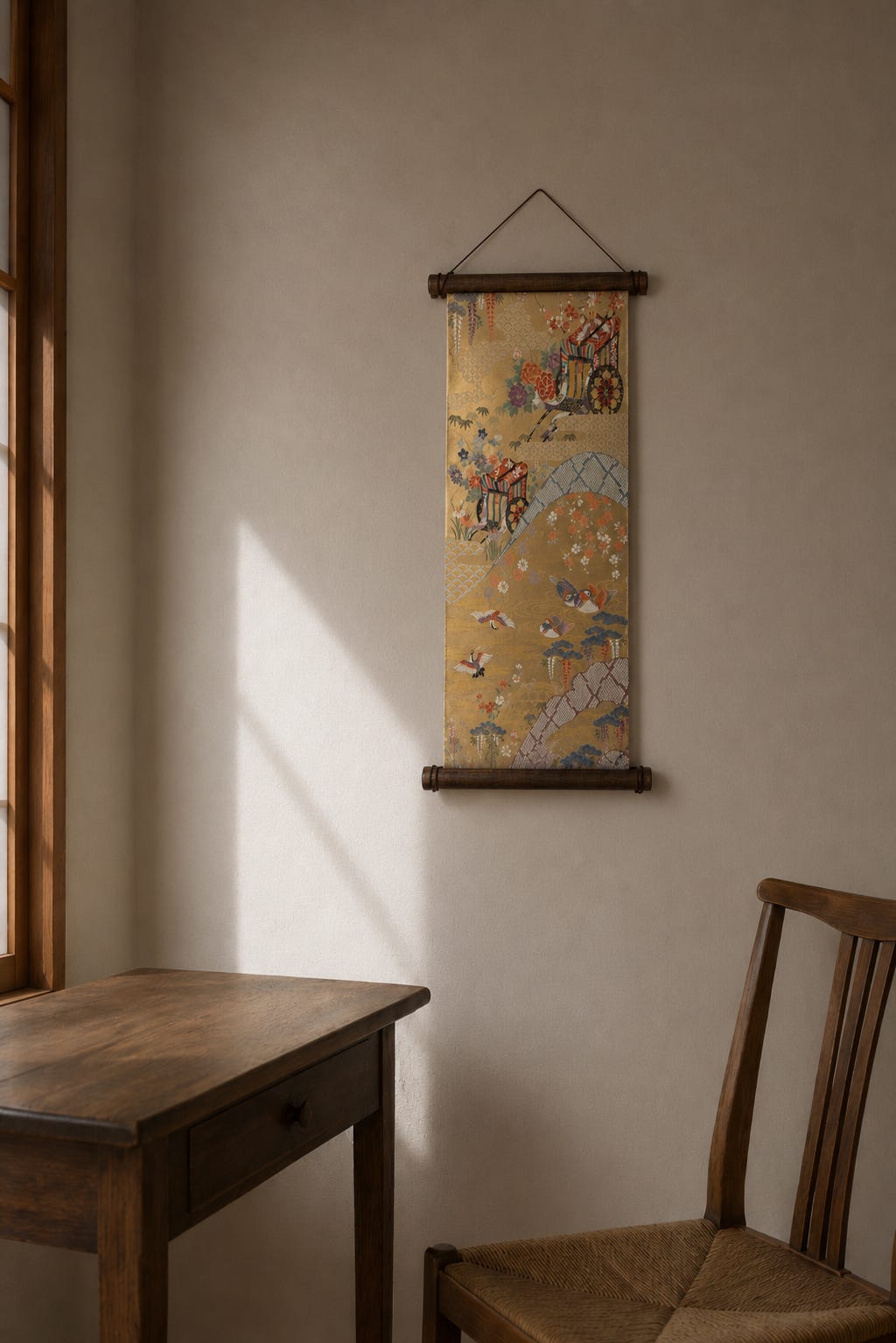
( Find this Japanese ceremonial silk scroll: discover the silk textile paintings )
· · ·
The Silk Journal · Renaras · journal.renaras.com
One silk. One story. One piece. Never repeated.
一片丝绸,一个故事,一件作品,永不重复。