

We are drowning in words. Not ideas — words. The distinction matters. An idea arrives once, if you are lucky, and changes the angle of everything. Words arrive in thousands, every hour, from every direction, and change nothing except your ability to sit quietly in a room.
This is the condition. You already know it. You are living inside it.
What you may not have noticed — because it is very small, and we have lost the habit of noticing small things — is that the answer was never going to be large.
I. There is a word in Japanese — ma (間). Negative space. The pause between the notes, without which there is no music — only sound. The silence between two people that holds more than either of them has managed to say. The empty wall that makes the single object hanging on it visible.
Ma is not absence. It is the architecture of presence.
It runs through Japanese material culture in a way that is easy to miss, because what it produces is — by design — almost invisible. Consider the obijime. A cord. No wider than a finger. Tied over the obi to hold the bow in place, in a dressing tradition that involves twelve layers of garment, two metres of wrapped silk, a silhouette that has taken an hour to construct.
The obijime appears incidental. A finishing detail. The kind of thing a careless eye passes over on its way to the spectacle.
It is where the whole composition resolves.
The cord is hand-plaited. The colour is chosen with reference to season, occasion, the exact tonality of the silk beneath it. In a tradition of extraordinary care, the smallest element receives the most. Because Japanese craft has always known what Western design is still learning: that restraint does not live in the grand gesture. It lives at the edges. In what you do when the main event is already finished and no one is watching and the temptation is enormous just to stop.
This is not perfectionism. It is something older and quieter than perfectionism. It is the understanding that the last three percent of attention is where the thing either becomes itself or doesn’t.
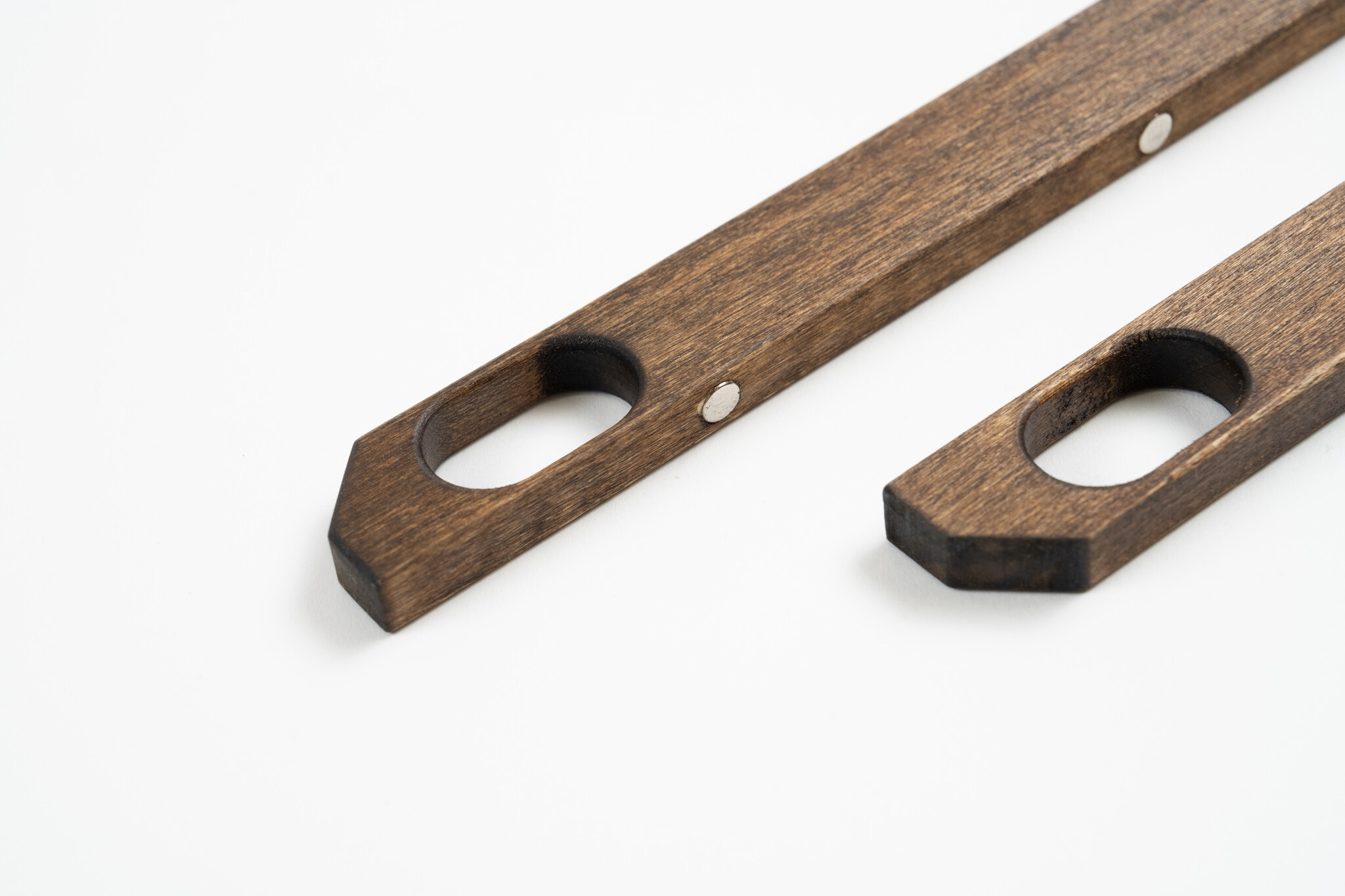
II. The patchin is a bag handle.
Two pieces of shaped wood — lacquered, or left natural, or somewhere between the two, which is its own kind of decision. Through them, a furoshiki is threaded: a square of cloth, folded, knotted, briefly a bag.
Described like that, it sounds like hardware. A practical solution to a carrying problem. And it is. But it is also an argument about the nature of objects that the contemporary world has largely lost the vocabulary to make.
The Western bag is a finished object. Manufactured, branded, sold as a complete and fixed identity. You buy it. It is a bag. It will be a bag until it stops being a bag and becomes rubbish. There is a beginning and an end and nothing in between except ownership.
The patchin and the furoshiki refuse this logic with a kind of gentle radicalism.
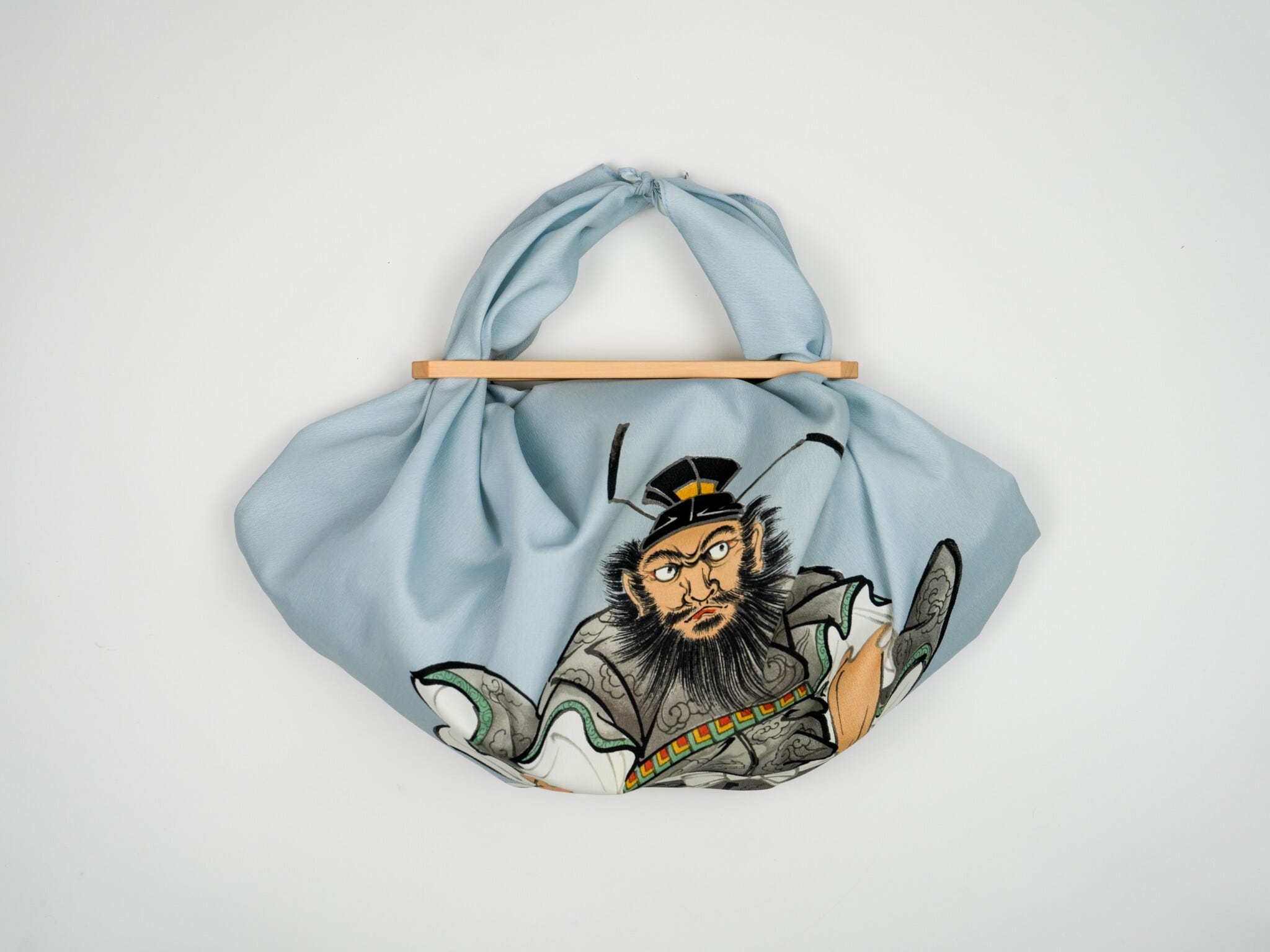
The handle is a handle. The cloth is cloth. Together, held by nothing more than the geometry of a knot, they become a bag — and then, when you arrive wherever you were going, they become something else. The furoshiki wraps a gift. The patchin sits on a shelf. The bag, in a sense, never existed at all. Only the intention did, and the objects that briefly served it.
Think about what this means for a moment. Think about how much of what you own is fixed in a single identity, performing a single function, unable to become anything else until it is discarded. Now think about a square of silk that can be a bag this morning, a wrapping cloth this afternoon, a table runner this evening, a gift in itself by the time it reaches someone else’s hands.
The furoshiki does not commit. It asks only that you decide, today, what it needs to be. Tomorrow is a different question.
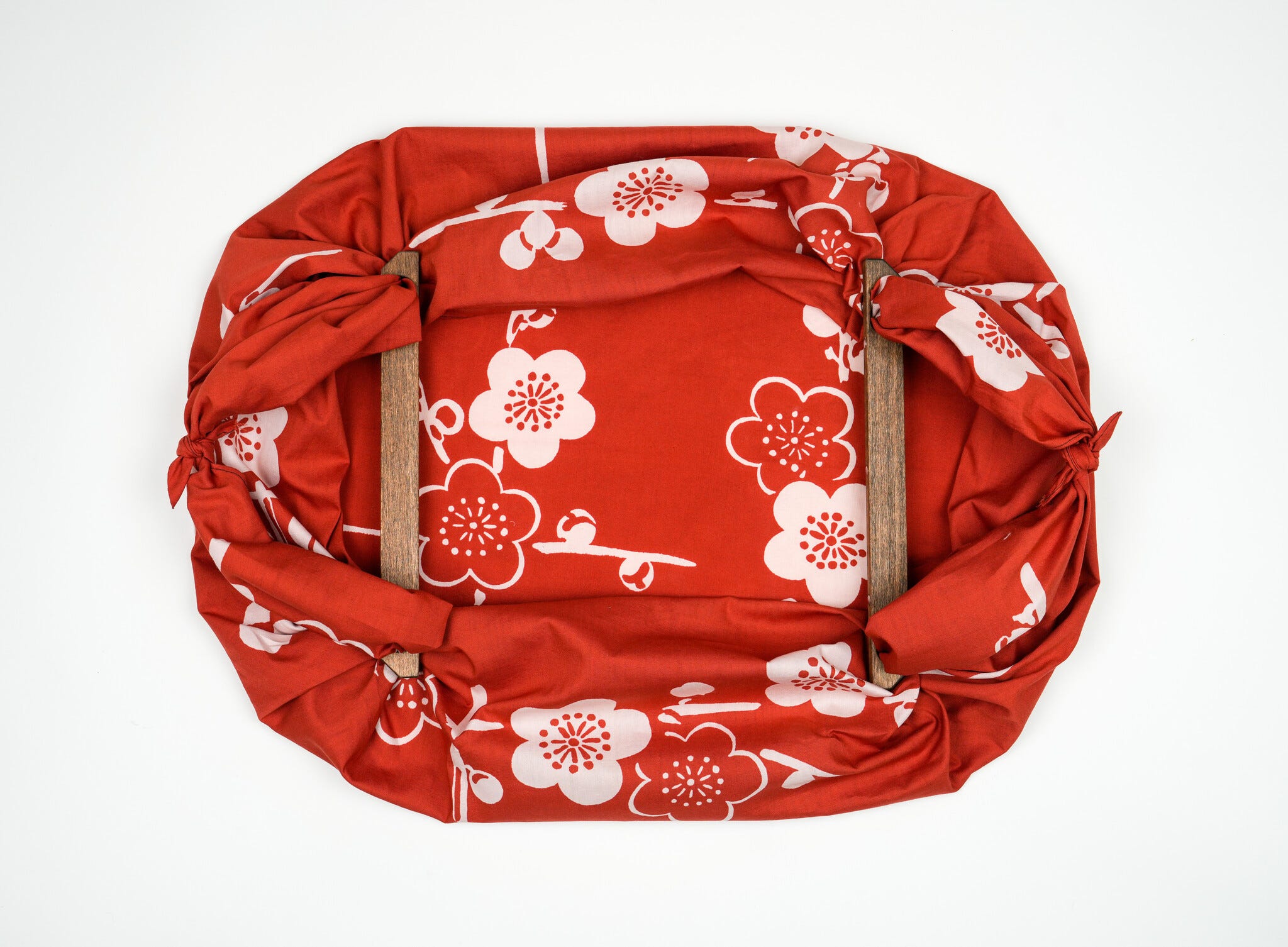
III. Cloth has been folded and knotted to carry things in Japan for well over a thousand years. It wrapped offerings at temples. It transported lacquerware and porcelain across cities when breakage was a real and serious loss. It was the packaging and the bag and the gift wrap simultaneously — a single object performing every role that contemporary life has assigned to a dozen disposable ones, each of which will outlast any landfill by centuries.
But what interests me is not the utility, though the utility is real and quietly staggering.
What interests me is what the furoshiki asks of the person carrying it.
You cannot grab a furoshiki the way you grab a tote bag. You have to make it. The knot requires a choice — this configuration, for this load, for this occasion. It takes perhaps forty seconds. Forty seconds in which you are not doing anything else. In which you are simply attending to a piece of cloth and a problem of geometry, and briefly, without drama, present.
This is ma again. The small enforced pause. The interval that changes the quality of what follows.
We have engineered these pauses out of daily life so thoroughly that we no longer notice they are gone. The pre-made, the pre-packaged, the instantly available: the entire logic of contemporary consumption is the elimination of the gap between wanting and having. Speed is sold to us as a form of respect — we value your time — when what it actually eliminates is the only part of time that makes anything feel real.
Forty seconds. Cloth. A knot. A choice about what you are carrying.
The furoshiki, quietly, insists on this.
IV. Here is what I believe, though I cannot prove it and would not want to: the objects that ask something of us change us. Not dramatically, not in the ways that self-help books promise. But incrementally, in the way that all the small things do — the morning walk, the handwritten sentence, the meal prepared with attention rather than haste. They deposit something in you. A capacity for noticing. A tolerance for the interval.
The obijime teaches the last three percent. The patchin teaches the impermanence of form. The furoshiki teaches the forty-second pause.
None of this is loud. None of it photographs particularly well. None of it will trend.
Which is, of course, precisely the point.
We are drowning in words, and the answer is very small. A cord. A handle. A square of cloth that does not know what it is yet, and is waiting, patiently, for you to decide.
The world has more than enough volume.
What it needs, what perhaps you need, is this: the small, practised, daily act of stopping before adding more. Of finding that the forty seconds are not stolen from your life but returned to it. Of discovering that restraint is not deprivation.
It is the only form of abundance that compounds.
The Silk Journal by Renaras — journal.renaras.com