

1. The “Zero-Submersion” Rule
The most critical directive for Maru and Fukuro Obis is to avoid water. These vintage textiles often contain an inner stiffening layer called obi-shin. If submerged, the silk outer layer and the cotton inner layer will shrink at different rates, causing permanent warping and “bubbling” of the fabric.
Spot Cleaning Only: Use a clean, lint-free white cloth. Dampen it slightly with distilled water and blot—never rub.
The Professional Path: If a spill occurs, consult a specialist dry cleaner who explicitly handles luxury heritage textiles. Standard perc-based dry cleaning can be too aggressive for the metallic embroidery often found in Renaras’ curated collections.
2. Environmental Guardianship: Light and Air
Silk is a protein-based fiber; it is effectively “organic matter” and remains sensitive to its environment long after it leaves the loom.
UV Protection: Direct sunlight is the primary enemy of vintage silk. It triggers “photochemical degradation,” causing the vibrant natural dyes to fade and the silk fibers to become brittle (shattering). Display your obi table r
unners away from south-facing windows.
The Seasonal “Air-Out”: Twice a year, remove your pillows from their inserts and hang the covers (and runners) in a shaded, well-ventilated area for 24 hours. This prevents the “musty” odor of trapped moisture without the need for chemical fresheners.
3. Structural Integrity: Folding vs. Rolling
If you choose to store your heritage pieces seasonally, your method of folding determines their lifespan.
The “Sausage” Method: Never create sharp creases. Creases in heavy silk are actually structural breaks in the fiber. Instead, place a roll of acid-free tissue paper at the fold point to create a “soft” curve.
Acid-Free Archiving: Standard cardboard boxes and plastic bins emit gases that can yellow silk over time. Use acid-free boxes and wrap each item individually in unbleached muslin or acid-free tissue.
4. Guarding Against the “Micro-Invaders”
Moths and carpet beetles are attracted to the proteins in silk. However, 2026 conservation standards advise against the use of naphthalene (mothballs) due to their toxicity and the lingering odor that bonds to silk.
Natural Repellents: High-grade cedar blocks or dried lavender sachets are effective, provided they never touch the fabric directly, as the oils can stain.
Periodic Inspection: Every six months, “reshuffle” your stored items. Insects prefer undisturbed, dark environments; regular movement is often enough to deter infestation.
Why Heritage Preservation Matters
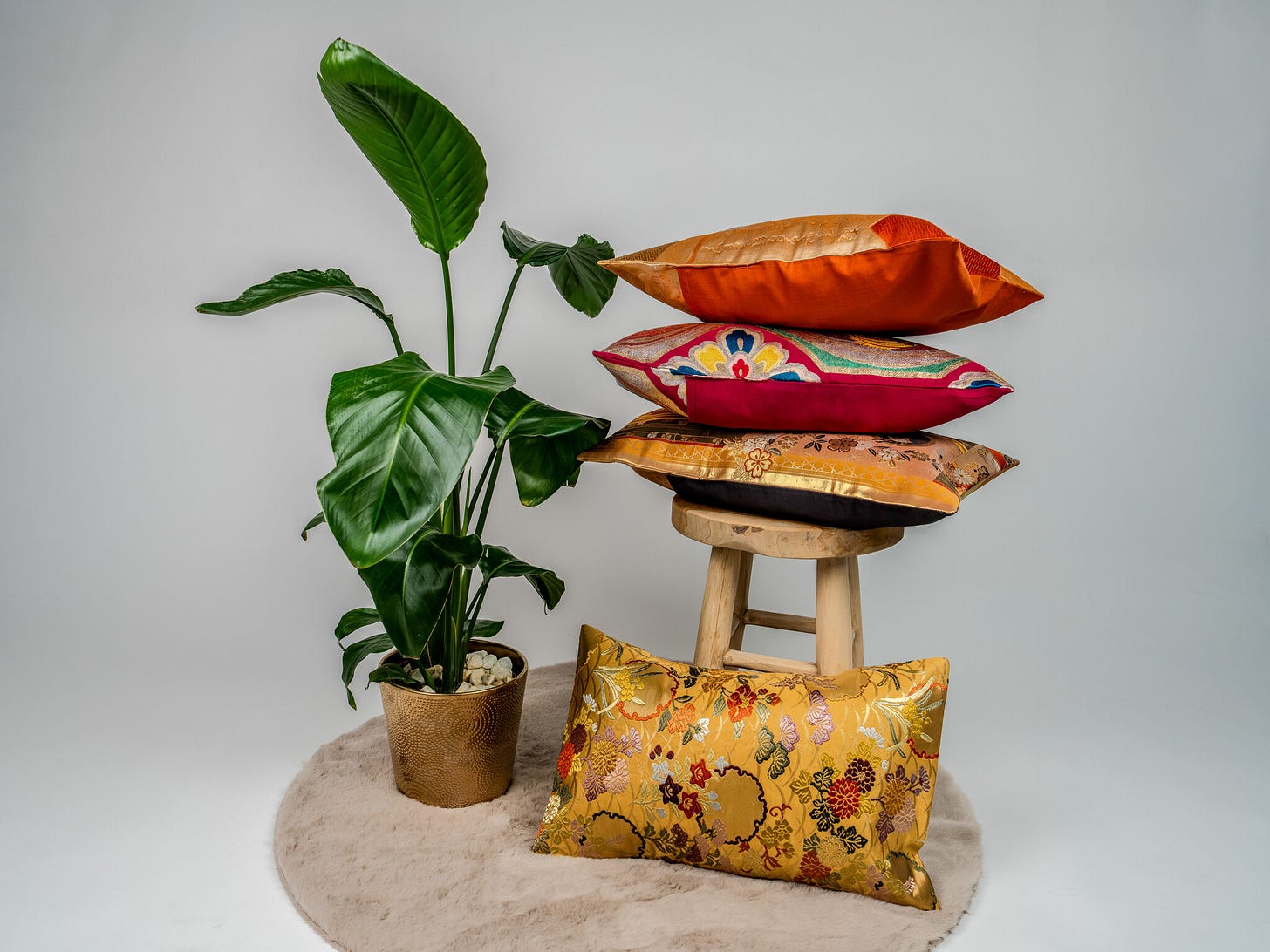
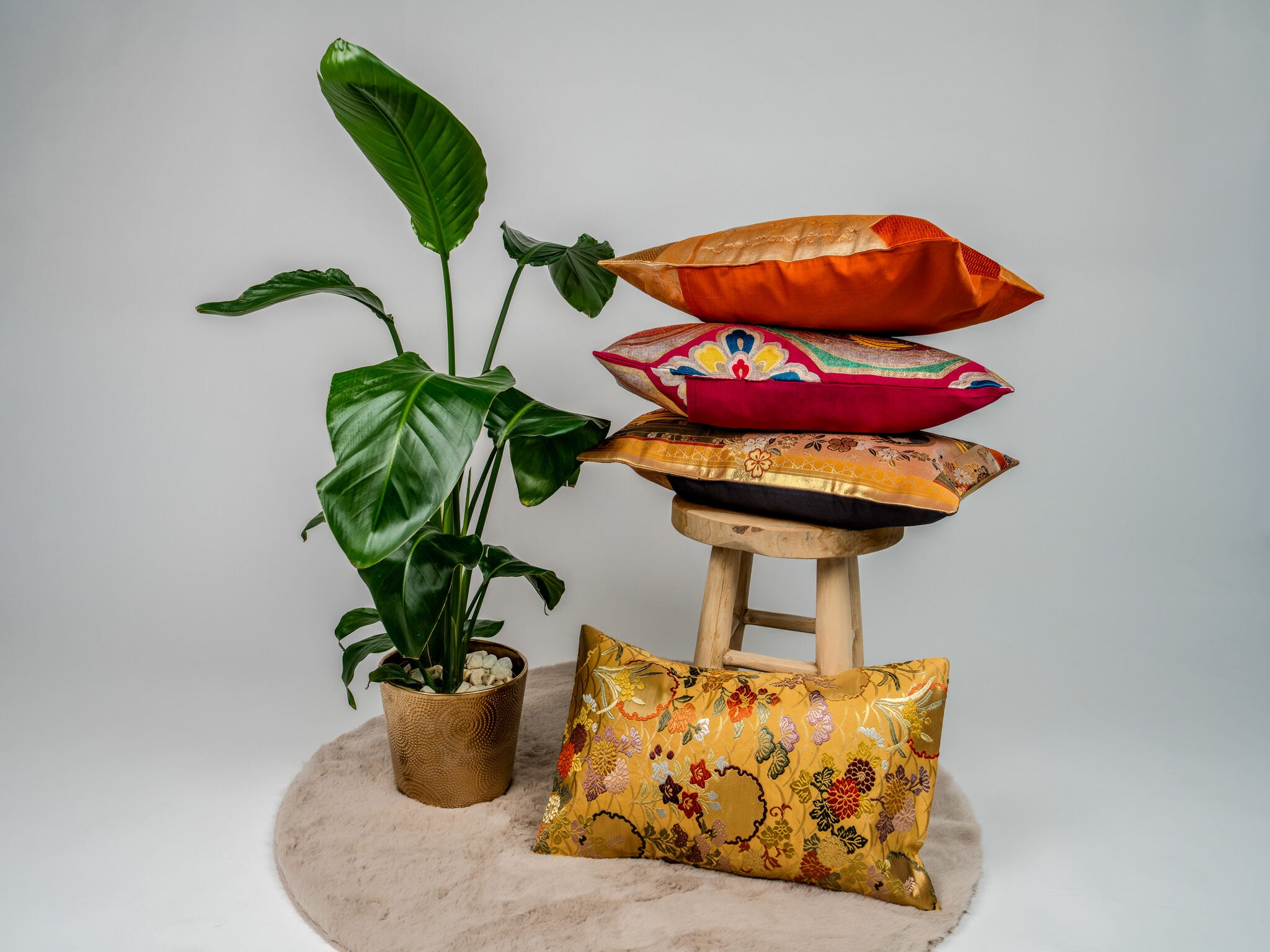
Investing in a piece from Renaras is an act of cultural stewardship. Whether it is a lumbar pillow crafted from a mid-century Fukuro Obi or a hand-painted silk runner, these items are “human-made” artifacts. By following these preservation protocols, you ensure that the artisan craftsmanship remains a centerpiece of your home for decades to come.