A question we get asked often: how do you actually put Japanese ceremonial silk into a European home without it feeling like a costume?
It is a fair question. The anxiety is that a piece of Nishijin obi, however beautiful, will read as exotic — a souvenir, a curiosity, an object from elsewhere that never quite settles into the room it occupies. We have spent enough time placing these pieces in real homes to know that the opposite is true, but it requires understanding a few principles.
The principle of one
The single most important rule is restraint. One piece of heritage silk in a room. Not a collection, not a theme, not a “Japanese corner.” One runner on a table. One panel on a wall. One lumbar pillow on a sofa. The room remains European. The silk becomes the room’s single point of concentrated intensity — and that concentration is precisely what gives it power.
Japanese interior design has a concept for this: ma, the meaningful space between things. A wall with one textile piece and nothing else around it is not empty. It is giving the textile room to breathe. The silk benefits from silence around it the way a good painting benefits from white wall.
Texture, not theme
The mistake people fear — the “themed” room — comes from matching. If you pair a silk obi runner with a Japanese ceramic and a bamboo plant and a calligraphy scroll, you have created a theme. The room becomes “about” Japan rather than being a room that happens to contain a Japanese textile.
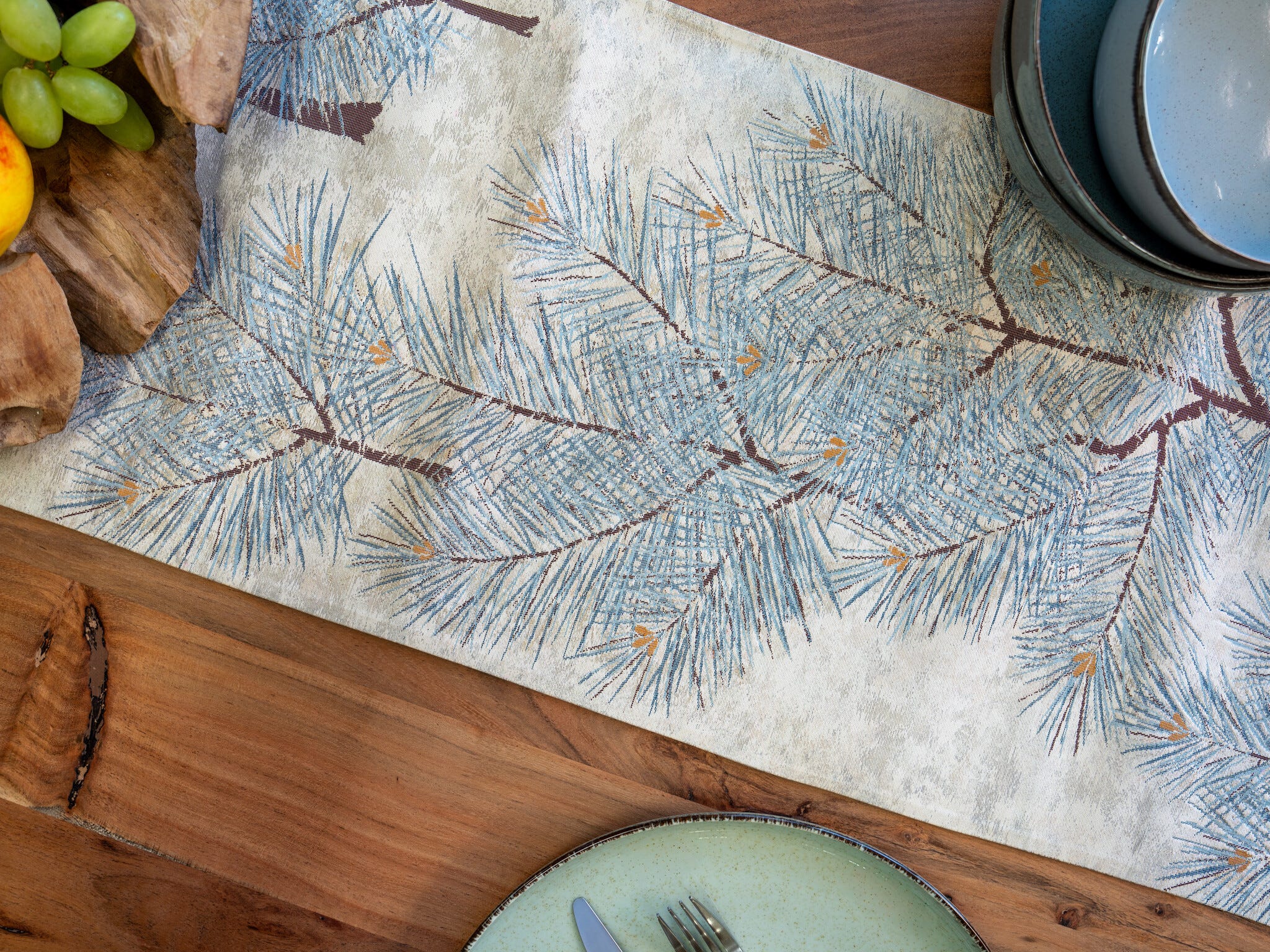
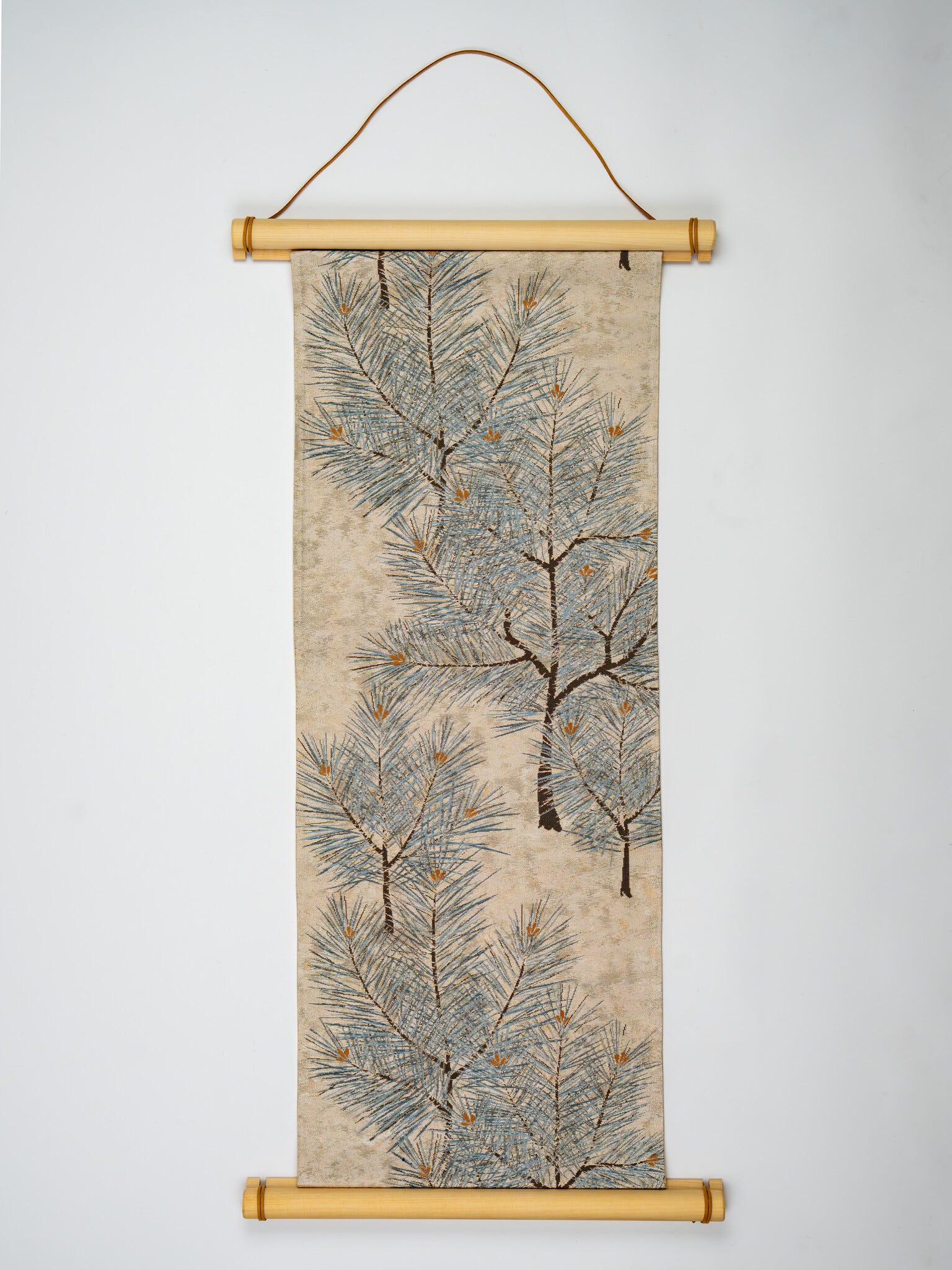
The better approach is contrast. A Nishijin silk runner on a table of dark Danish oak. A gold-thread obi pillow on a boucle sofa in a Belgian apartment. A framed silk panel in a hallway of Haussmannian mouldings and herringbone parquet. The Japanese textile meets the European architecture and the friction between them produces something neither could produce alone.
The specific quality of silk — its ability to catch and release light, that gentle lustre that comes from the triangular cross-section of the fibroin fibre — reads differently against matte European surfaces. Against honed stone or raw plaster, the silk provides warmth. Against dark wood, it provides luminosity. Against pale linen, it provides depth. In each case, the textile is not competing with the room. It is completing something the room was missing.
Three placements that work
The table. This is the most natural home for obi silk. The cloth was designed to be horizontal — wrapped around the body at waist height — and it translates to a table surface with ease. A runner across dark oak or walnut. Placemats flanking a centrepiece. The weight of the silk — its koshi, the gentle firmness that keeps it from sliding or bunching — makes it feel architectural rather than decorative. Dinner becomes slower around it. People notice.
The wall. A large-format obi panel, hung unframed or in a simple float mount, becomes the room’s anchor. The key is scale: the panel should be large enough to command the wall, and the wall should be otherwise empty. Morning light will reveal one quality in the weave; evening light another. This is living art in the most literal sense — art that changes across the day.
The sofa. A single silk lumbar pillow, placed asymmetrically — one end of the sofa, not centred — introduces the textile at a scale that is intimate rather than declarative. It is the piece guests reach for without thinking, the object that gets touched before it gets discussed. This is where the haptic quality of vintage silk does its work. The hand discovers what the eye suspected: this is not ordinary cloth.
What to avoid
Too many pieces in one room. Matching Japanese objects to Japanese textiles. Placing silk in direct sunlight — UV will degrade the fibres and fade the dyes over time. And overthinking it. The silk has survived decades already. It knows how to be in a room. Trust it.
Explore the Renaras collection.
Visual Styling: From Table to Wall