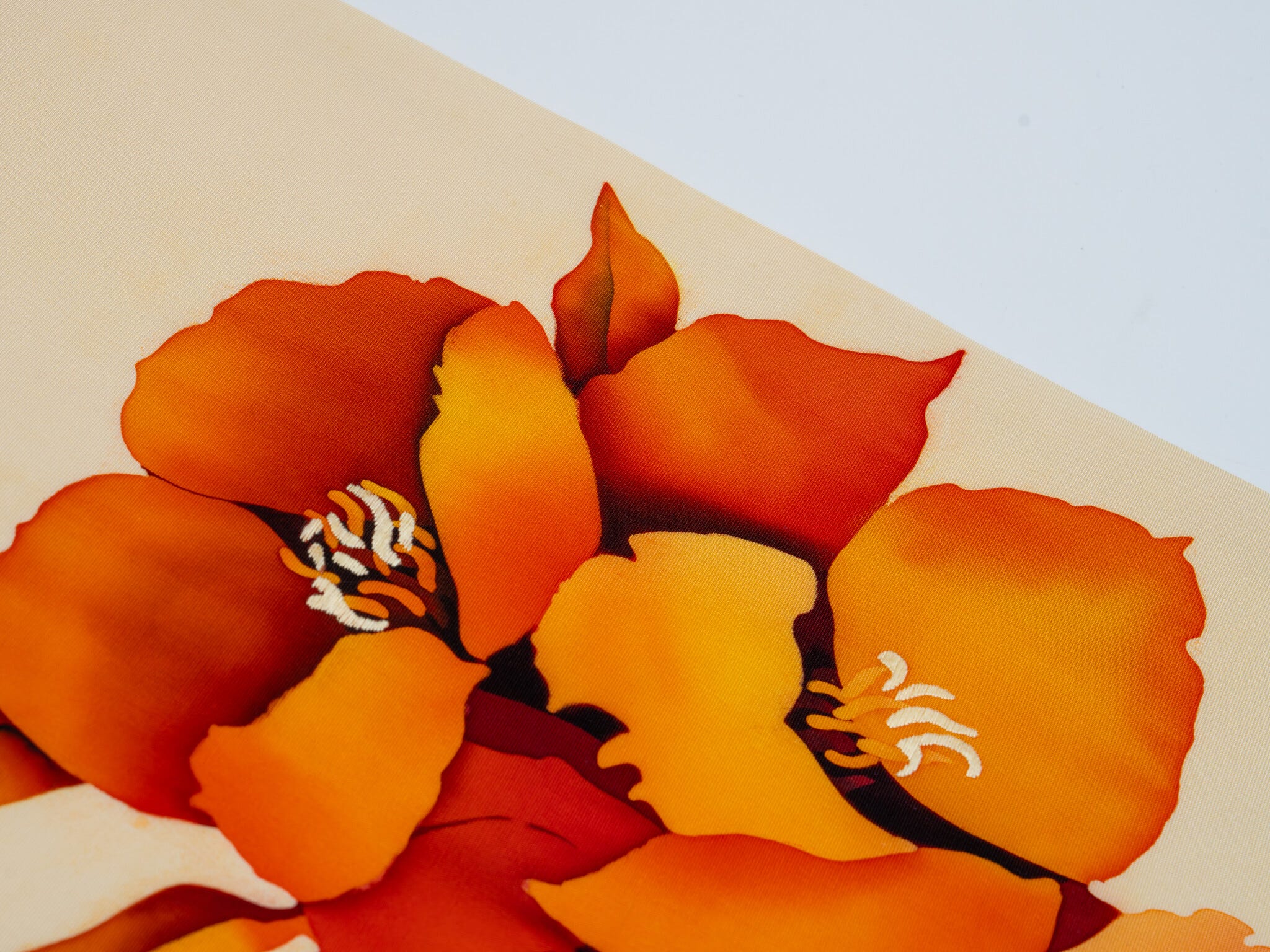
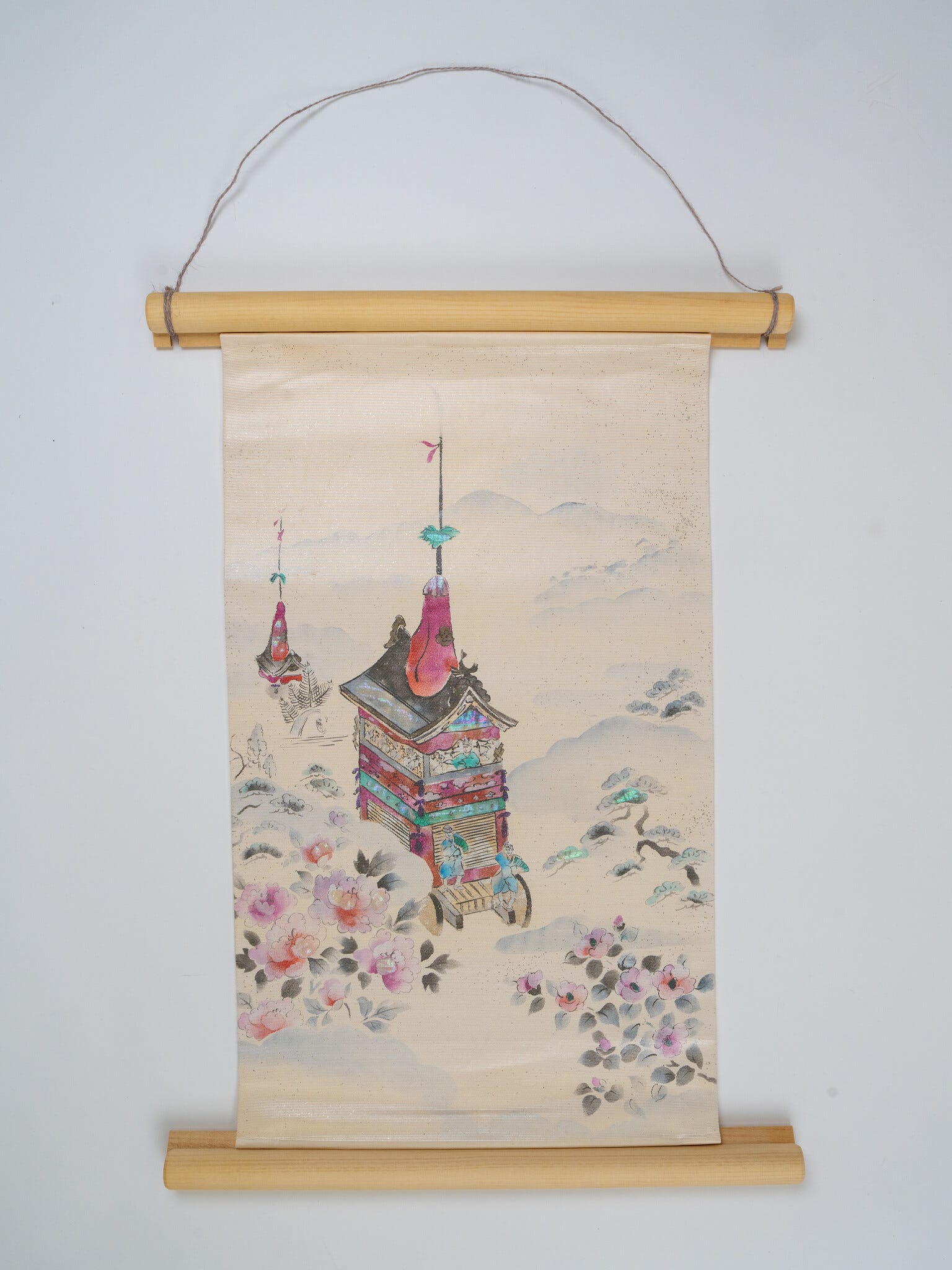
Pick up a piece of vintage Nishijin obi silk and you will notice the weight before you notice anything else.
Not heaviness, it is silk, after all, but density. A kind of concentrated material presence that your hand registers immediately as different from contemporary fabric. The weave is tighter. The threads are finer but more numerous. The surface has a quality that I can only describe as composed: it does not drape loosely or collapse into softness. It holds itself.
This is the first thing visitors notice when they handle Renaras pieces. Before they see the motifs, before they register the gold thread, before they read the provenance certificate, they feel the weight. And something in that weight tells them this object has a different relationship with time than the things they are used to holding.
Why the old silk is different
There are technical reasons. Vintage ceremonial obi, particularly those woven in traditions like Nishijin-ori or Saga-nishiki, were produced on looms carrying thousands of individual warp threads, tightened not by machine calibration but by the physical rhythm of the weaver. The resulting structure has a resilience that modern production, for all its precision, does not quite replicate. Modern silk can be smoother. It cannot be this alive.
Many heritage obi also incorporate haku: microscopic strips of gold or silver leaf, pressed onto handmade washi paper, cut into thread-width strips, and woven into the silk. The technique is almost absurdly labour-intensive. The result is a surface that does not merely reflect light but interacts with it. Morning light reveals quiet depth, afternoon light draws out a soft shimmer, evening light allows the textile to recede into warm shadow. The material responds to the day. It participates in the life of the room.
What this means inside a home
There is a difference between a room that appears styled and a room that feels settled. The distinction is hard to articulate but immediately obvious when you experience it. Styled rooms look correct in photographs. Settled rooms feel right when you sit down in them.
A single piece of vintage silk can move a room from one category to the other. A runner on a dining table, placed on honed stone or raw oak, introduces a focal point that is quiet but unmistakable. A lumbar pillow on a deep sofa brings something to the room that new objects, however beautifully designed, cannot carry: the accumulated evidence of time in the material itself.
The Japanese have a word for this quality, koshi: a gentle firmness. Substantial. Cool to the touch. Grounded. It is silk that feels composed rather than delicate.
The Japanese aesthetic concept of ma, meaningful space, the pause that gives everything around it definition, is relevant here. One considered textile in an otherwise restrained room creates ma. The room grows quieter around it. The light softens. The space becomes intentional.
Each Renaras piece is singular. A fragment of time made tangible.
Explore the Heritage Collection at Renaras