

An object made for ceremony has a strange life. For a few hours, or a few occasions, it is the centre of everything: the cloth worn for the wedding, the vessel used in the rite, the silk displayed for the festival. Then the occasion ends, and the object must become something else, because it cannot stay at that pitch forever. Some ritual objects are retired into storage, their working life over. Others find a second existence, quieter but longer, as things to be lived with. The question this raises is a genuine one, and it deserves more than a decorator’s easy answer: what do we owe an object that was made for ceremony, when we bring it into ordinary life?
The careless answer is that we owe it nothing, that an object is an object and may be used however we please. The over-careful answer is that such objects should never leave their ritual context at all, that to hang a ceremonial cloth on a domestic wall is a kind of diminishment. Both answers are too simple. The truer position lies between: that a ritual object brought into daily life asks to be treated with knowledge and a certain respect, but that, so treated, it is not diminished by domestic life. It is given a second purpose, which is to go on meaning something, quietly, for years.
We do not preserve dignity by hiding an object away. We preserve it by understanding what we keep.
The difference between using and keeping
There is a distinction worth drawing between using a ceremonial object and keeping one. To use it would be to press it back into a function it has outgrown, to make a ceremonial cloth into a table napkin, to treat the sacred as merely available. To keep it is different. It is to give the object a place of honour in ordinary life, where it is not used up but attended to: mounted, framed, hung where it can be seen and considered. A ceremonial silk kept this way has not been demoted from rite to decoration. It has been promoted from occasion to permanence, from the cloth seen once to the cloth lived with always.
This is the register in which Renaras works, and the reason the transformation matters. A vintage obi is not cut down carelessly. It is studied, and remade into an object whose whole purpose is to let the cloth continue, to be seen, to hold its meaning, to last. The ceremonial dignity of the original is not erased by this. It is carried forward into a form suited to a contemporary life, so that the cloth that once marked a single day can now mark a room, every day, for whoever lives there.
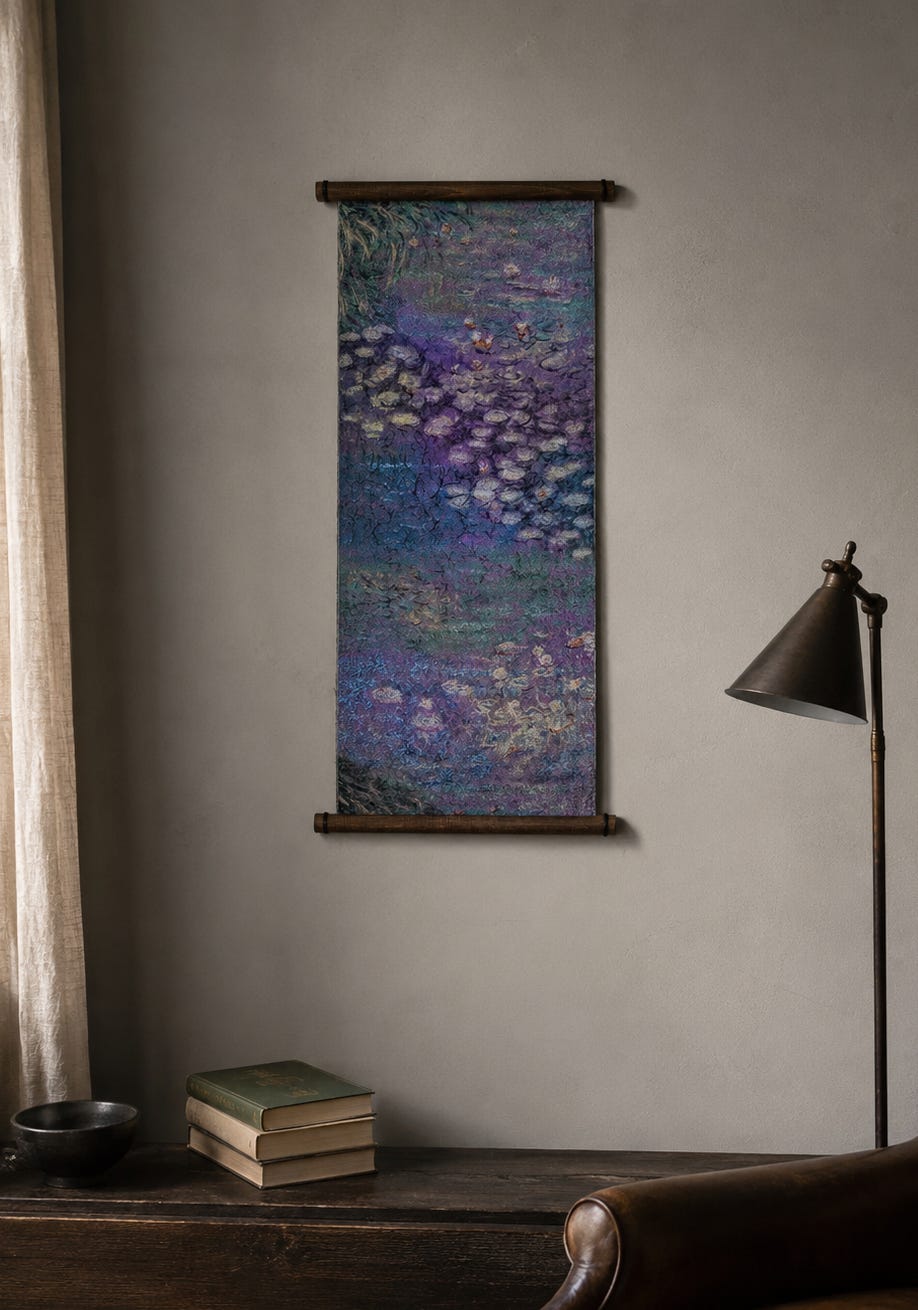
The Giverny Dream, Water Lilies in Violet and Silver
How a designer holds the balance
For the designer, the afterlife of a ritual object is a question of placement and restraint. An object that once held ceremonial weight should not be hung casually, lost among unrelated things, treated as one decorative element among many. Nor should it be roped off, made untouchable, turned into a museum exhibit in a private home. The balance is to give it presence without solemnity: a wall of its own, or near enough; light that lets it be seen; a setting quiet enough that the object’s own gravity can be felt. The room should make clear that this piece is known and valued, without making the room into a shrine.
Done well, this is among the most sophisticated things an interior can achieve, and clients feel it even when they cannot name it. A room that holds a ceremonial object with the right balance of honour and ease tells a visitor something about the people who live there: that they keep things that matter, that they understand what they keep, that they have made a place where the significant and the everyday can coexist without either being diminished. That is not decoration. It is a way of living with the past that neither worships it nor wastes it, and a ceremonial textile, rightly kept, is its clearest expression.
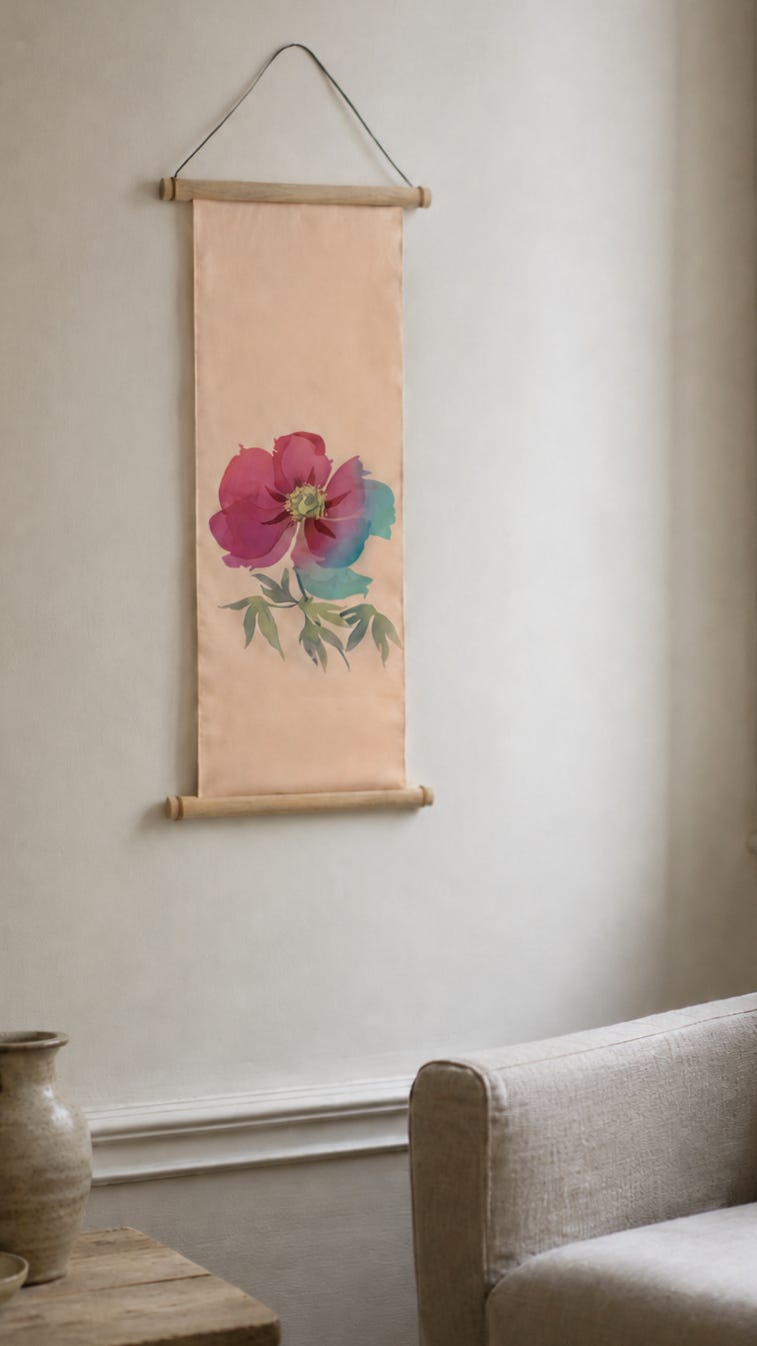
The Anzu-Botan, Botan Peony in Apricot and Magenta
Each Renaras piece is made so a ceremonial cloth can continue into daily life with its dignity intact, documented as to what it was and what it meant. Browse the current edit on Decorative Collective, and message through the platform to talk through how a particular piece might be kept, and honoured, in a particular room.
The Silk Journal · One silk. One story. One piece. Never repeated.